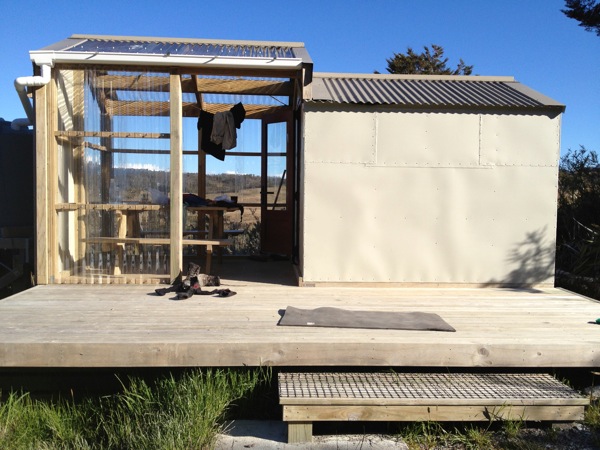
Just one of about 15 for sale on Felt. – I can still do them before Christmas, hurry.
http://felt.co.nz/shop/waltzzz
Walter Logeman: Journal

Just one of about 15 for sale on Felt. – I can still do them before Christmas, hurry.
http://felt.co.nz/shop/waltzzz
Kevin Kelly (What does Technology Want? p196) quotes George Lucas:
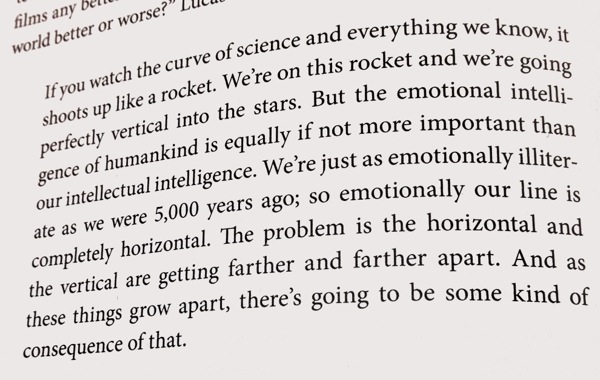
Just maybe that is about to change (Perhaps on December 21?? 🙂
I think we are in a rapid change right now. It will be more visible soon. I think the feminist consciousness, the decline of religion, urbanisation, education are all leading to a shift in consciousness that means there will be ever more psychotherapists.
See also:
I’m uploading this via Mars Edit and then hopefully it will show a retie resin appropriate image on retina displays. And smaller one on other displays.

That was sent up as 2414 × 6992 (16.9 MP) — can it handle that?
Maybe something more reasonable, 2448 × 3264 (8.0 MP):

Later: These images do look remarkably sharp on my non retina MacBook Pro with the setting to always serve the retina images.
I’ll try it without.
Later:
Seems to make no difference – be good to hear from someone with a retina MacBook Pro
These images were from a recent walk up the SawCut gorge north of kaikoura.
http://culturalicons.co.nz/resources
This is an amazing site. A treasure. Video Episode after episode of long outpourings by interesting people. Most of them quite old!

The book by Kevin Kelly “What does technology want continues stimulate my thinking.
He is eloquent on the evolution of tech. To make his case he draws on parallels in biological evolution. He comes up with principle after principle that are deep insights into any change process. He reminds me constantly of Frederick Engles and on the dialectics of nature. There are principles of change that go beyond one sphere.
Today it is this S curve that grabbed me.

You would need to read the chapter to fully get it, but take the example of rail road air as the three levels of technology that work together to ensure that transport increased at a constant level, of say miles, speed and lower costs.
What I do is relate this to the evolution of psychotherapy. Or lets call it conscious intimate relationships. A mere 40 years ago there were about 10 therapists/counsellors in Christchurch, now it is more like 400. What is that curve about? The psyche is on the move!
I imagine the three technologies are:
Analytical psych
Humanistic Psych
And now still in the lower reaches of its s curve, relationship psych
Summary of Norms and Guidelines
for Communologue1. Everyone is mirrored. This slows sharing down but develops a sense of each speaker feeling safe and being fully heard.
2. Anyone can volunteer to mirror. If no one else wishes to mirror the speaker, the facilitator(s) will do it. We suggest that if a person wants to “respond” to what has been said, they not be the one to mirror the speaker to whom they wish to “respond.”
3. Have an attitude of pre-validation.* In other words, assume that all persons “make sense” and are valid before they speak. Listeners seek to understand the “sense” that speakers are making and are trying to express.
4. The group holds the “space of validity” for all members and encourages the sharing of different points of view.
5. Avoid MasterTalk* – in other words avoid sentences that imply that only one point of view is correct. If Master Talk statements are made, “Boundary insertions” may be used to return the tone to one of sharing.
· “This is a fact” is politely mirrored, “So you believe…”
· “This is what happened” becomes “So you remember…
· “You are wrong” becomes “So you think differently. You think…”
· “I think I speak for everyone here” is met with a polite request to just state what is true for him or her.6. Value silence skillfully. Powerful points are often followed by silence. Silence doesn’t have to be filled right away. Listen for the emerging wisdom of the group.
7. Silence, on the other hand, can be a signal that talk is going underground. If this is perceived, a facilitator may invite and encourage sharing.
8. Facilitators and group members encourage all points of view and honor real differences.
9. Work to shift the tone from “conflict” to “sharing”. Saying you want to make an “addition” can be a powerful alternative to debating and win/lose thinking.
10. Encourage a sense of seeing a larger picture by valuing each person’s contribution to the group consciousness.
11. Learn to enjoy hearing and sharing even ideas you don’t particularly like. Learn to hold the tension of differences and grow the communologue space.
12. Senders should make relatively short sends; paying attention to the needs of other’s to share the time available.
13. It is believed helpful for senders to stay with one subject per send.
I’m studying up on master talk. Here is a link to Al’s main essay. There is also a link there to an MP3 which I bought.
MASTER/SLAVE, Two World Problem: The Essay | Al Turtle’s Relationship Wisdom
Certain words can clue you into MasterTalk:
‘is’ , ‘know’, ‘the fact that’, ‘reality’, ‘we’ or ‘you.’”
I am trying to get the idea, these little lists help a lot.
The way out, Friend/friend talk, includes phrases such as
The are I statements about information – cognitive I statements.
I like Al’s definition:

Note this is not a relativist position. There may well be one truth. But each of us has our own experience, leading us to our own conclusions and beliefs.
❋
Sunday, 01 August 2021 — downloaded from Al’s website, to add a bit of redundancy to its survival.
Al Turtle’s Relationship Wisdom :: MASTER/SLAVE, Two World Problem: The Essay
To Imago Therapists | Al Turtle’s Relationship Wisdom: “”
Worth a read, especially the paragraphs on Master Talk
Continue reading “To Imago Therapists | Al Turtle’s Relationship Wisdom”