
At times, Earle rightly makes no attempt at subtlety at all–as with his opposition to the coming war on Iraq. “We intended to go into Iraq before September 11, and we’re gonna go into Iraq, and that’s part of this big lie,” Earle argued in a recent interview. “Iraq had fuck all to do with September 11! John Walker Lindh had fuck all to do with September 11! It’s just scapegoating, and scapegoating is always about making somebody feel more than, by making somebody else feel less than–and that’s a really dark, dangerous, malignant thing to do.
What Price the American Empire?
What Price the American Empire?
Is the empire worth it? French, Brits, even Soviets said no. They went home. And nothing over there not oil, not bases in Saudi Arabia, not global hegemony is worth risking nuclear terror over here. I may be the only right-winger in America who loves D.C., but then I grew up here. Washington is my hometown. It comes first, and empire isn’t even a close second.
Strange to be quoting the RIGHT here, but he can see clearly that all this about imperialism. We are in for an new Empire that will take a lot to defeat.
Arundhati Roy
Guardian
Indian writer Arundhati Roy argues that it is the demands of global capitalism that are driving the West to war with Iraq
Andrew Samuels interviewed by Ruth Williams
On the publication of his new book, Politics on the Couch: Citizenship and the Internal Life, Andrew Samuels is interviewed by psychotherapist Ruth Williams.
More
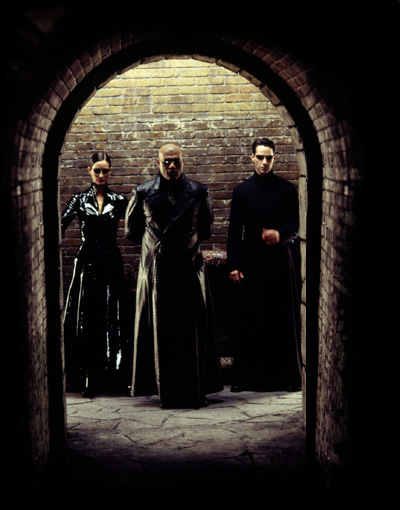
The Matrix and Baudrillard’s Concept of Simulation
Evil Demons, Saviors, and Simulacra in The Matrix
by Doug Mann & Heidi Hochenedel. This essay is well done. Looks at the themes as three distinct entities: Christian, Descartian, and Baudrillardian. Convincing, apart from its conclusion, which may be because of the bankruptsy of The Matrix themes themselves, after all the movie is itself part of the hyperreal Hollywood machine. Or it may be that they have some strange pomo ideology?
I went to the hyper website and used copy, paste-into-editor, print, to get an accademic looking paper from the unreadable mess (including irritating sound!) on the screen. This process was like returning to a welcome desert of the real – I like it better in black and white.
History of the tilde
~
dive into mark/October 4, 2002
I love this sort of stuff. This Mark does thorough items and is ALWAYS in the Daypop Top 40 Links.
J. G. Ballard – www.contemporarywriters.com
J. G. Ballard – www.contemporarywriters.com Critical Perspective
‘We live inside an enormous novel’, observes Ballard in the introduction to his most controversial novel Crash (1973), ‘The fiction is already there. The writer’s task is to invent the reality’.
The Matrix – Essential to the exploration of psyche and cyberspace
The Matrix – Simulacra and Dystopia – Planet Papers
Ours is a world that is both everywhere and nowhere, but it is not where our bodies live. (Barlow, 1996)
Youve been living in a dream world Neo. This, is the world, as it exists today: Welcome to the desert of the real. (Morpheus to Neo in The Matrix)
Open Knowledge – great idea.
MIT and the OpenCourseWare team are excited to share with you a first sampling of course materials from MIT’s Faculty. We invite educators around the world to draw upon the materials for their own curricula, and we encourage all learners to use the materials for self-study.
This has to be phenomenal. Whatever their motives, whatever the actual use of it by the masses, somewhere somehow this can tip the balance… though of course for sheer access to knowledge the Internet has already made this transformation in the world.
I wonder what restrictions apply? What if I offer a course based on the material? What if other Unis do that?
See also the Wired item: All the World’s an MIT Campus
BBC NEWS | Science/Nature | Life’s not so complicated web
BBC NEWS | Science/Nature | Life’s not so complicated web
As in social groups, cliques tend to form in which every member knows all or most of the other members. The researchers used a measure called the clustering coefficient that describes how clique-like a network is.