Seven Transforming Conversations:
Recognizing Demon Dialogues—In this first conversation, couples identify negative and destructive remarks in order to get to the root of the problem and figure out what each other is really trying to say.
Finding the Raw Spots—Here, each partner learns to look beyond immediate, impulsive reactions to figure out what raw spots are being hit.
Revisiting a Rocky Moment—This conversation provides a platform for de-escalating conflict and repairing rifts in a relationship and building emotional safety.
Hold Me Tight—The heart of the program: this conversation moves partners into being more accessible, emotionally responsive, and deeply engaged with each other.
Forgiving Injuries—Injuries may be forgiven but they never disappear. Instead, they need to become integrated into couples’ conversations as demonstrations of renewal and connection. Knowing how to find and offer forgiveness empowers couples to strengthen their bond.
Bonding Through Sex and Touch—Here, couples find how emotional connection creates great sex, and good sex creates deeper emotional connection.
Keeping Your Love Alive—This last conversation is built on the understanding that love is a continual process of losing and finding emotional connection; it asks couples to be deliberate and mindful about maintaining connection.
Sue johnson and Emotionally Focussed Therapy
This video is worth watching.
I’m particularly interested in how she names the couple dynamics, the dance that people have. I like the way that couples devise their own name for them.
In this way couples can create dialogues they think will particularly address the dance.
Here is her book on Amazon
Tom & Viv

Though the filmmakers present ample evidence of Viv’s antisocial behavior — at one point she pulls a rubber knife on Virginia Woolf in order to steal her taxi — they never really manage to get into Tom’s mind to the extent that his motives become clear. “Tom & Viv” is a handsome, literate film in the Merchant-Ivory mode, but there’s a hole right at the center of it — right where the poet himself should be.
Harville Hendrix – Beyond conflict
Safety
Connection
Passion – full aliveness – relaxed
Beyond conflict – tension but not oppositional.
~
The quality of the presence is what counts – not the words or the behaviour.
Music
Date: Mon, 06 Aug 2012 04:28:16 -0700
Mime-Version: 1.0
Content-Type: text/html;
charset=UTF-8
Content-Transfer-Encoding: 7bit
Content-ID:
A new post on In this moment… my art blog – http://www.walterlogeman.com/art/music/ http://www.walterlogeman.com/art/images/2010/4eb72bef2c7eb59b057d8eba1253c741.jpeg
Music

Exploring an old theme of mine with new apps.
There is rhythm in this style so I call them Music.
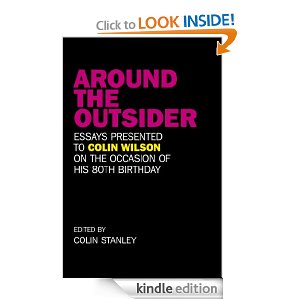
Colin Wilson online — Intentionality
Philosophy « Colin Wilson online:
One concept I recall from my Colin Wilson reading phase was Intentionality. This was one of the ideas I have stuck with as being useful. I associate it (rightly or wrongly) with Aldous Huxley and the “Doors of Perception”. We are capable of seeing far more than we do. We evolved to see everything and then evolved to select to see only what we need to survive. We can transcend our survival mode of perception with “intentionality”. I think that sums it up.
“Wilson has a sporting analogy for philosophy: ‘You could say on the billiard table of philosophy there are only two pockets – the positive and the negative. In philosophy, all kinds of people who belong to the negative side like David Hume, don’t really believe that the human will serves any purpose whatever. In other words it seems to me that in philosophy you’ve got people who believe that to a large extent, will really matters, and that we human beings have a certain control over our lives, and people who belong to the other side. And basically Derrida is one of these.’ He describes intentionality with another sporting analogy here: ‘Intentionality should not be seen as a synonym for ‘directionality’, an essentially static attribute, but as a dynamic description, involving consciousness and its freedom to act. It is better described by analogy with a baseball pitcher than with a signpost. Paul Ricoeur was the first to state this with clarity. I will suggest that Husserl saw intentionality as a creative act, capable of altering consciousness, and potentially as a kind of mystical discipline.’ That is to say, consciousness is active (perception is intentional). You can see this in Fitche’s statement ‘to be free is nothing; to become free is heavenly.’ This is completely opposed to the passive ‘signpost philosophy’ (semiotics) of Barthes and the ‘language speaks us’ of Derrida.
All of Wilson’s work is concerned with Husserl’s techniques [and Nietzsche’s optimism]. Not just his philosophy books though: the true crime paperbacks, the luridly covered supernatural volumes, the pulp fiction and even the books on booze or music are all in the positive pocket. In The New Existentialism he explains why – ‘Phenomenology is not a philosophy; it is a philosophical method, a tool. It is like an adjustable spanner that can be used for dismantling a refrigerator or a car, or used for hammering in nails, or even for knocking somebody out.’ (p.920).
In the seven volumes of his excellent ‘Outsider cycle’ (1956-1966), Wilson demonstrates the phenomenological method. ‘Husserl has shown that man’s prejudices go a great deal deeper than his intellect or his emotions. Consciousness itself is ‘prejudiced’ – that is to say, intentional.’ (ibid. p 54). So, in order to really experience phenomena, we have to grasp it, like a hand picking up an object. This selectivity is so deeply entrenched in our perceptions that we fail to see it operating and think that things just ‘happen’. But it is not so: perception is intentional, rather like an arrow fired by an archer. The illustration below shows this selectivity in action, as we can choose to see either the faces or the vase, rather like flipping a coin.


Colin Wilson


Podcasts I’ve enjoyed lately
I’ve been using Pocketcasts on the iPhone. The first one I’ve liked in all these years. The iTunes one never satisfied and the way I used to do it – was clumsy. But it worked and was essentially what I did on the Palm.
Conversations on a City
Date: Sun, 22 Jul 2012 01:44:45 -0700
Mime-Version: 1.0
Content-Type: text/html;
charset=UTF-8
Content-Transfer-Encoding: 7bit
Content-ID:
A new post on In this moment… my art blog – http://www.walterlogeman.com/art/conversations-on-a-city/ http://www.walterlogeman.com/art/images/2010/IMG_1811.jpg