Google Search: define:countertransference


Google Search: define:countertransference

The entries on countertransference are more interesting and list both projections and projective identifications, which I think is right. Not bad for Artificial Intelligence (or is this human aided?) But it still does not really include the guts of it all. Of course the beauty of these definitions is that they link to websites, which will have more guts.

Google Search: define:countertransference: a type of projection. Dangerous when a therapist identifies with emanations from the client’s manifestations of the collective unconscious.
www.tearsofllorona.com/jungdefs.html

– the conscious and unconscious emotional reaction of the professional to the client.
www.calib.com/nccanch/pubs/usermanuals/menthlth/glossary.cfm

a term used in psychodynamic therapy describing a situation in which the therapist becomes emotionally involved with the patient, projecting the therapist’s own feelings onto the patient
lms.thomsonelearning.com/hbcp/glossary/glossary.taf

the psychoanalyst’s displacement of emotion onto the patient or more generally the psychoanalyst’s emotional involvement in the therapeutic interaction
www.cogsci.princeton.edu/cgi-bin/webwn

Define:transference

I am reading an article on transference in psychotherapy – and thought I’d use the Google ‘define:’ function – to see if it helped… not bad so far but it has not gone beyond what I know already.

Google Search: define:transference: “(psychoanalysis) the process whereby emotions are passed on or displaced from one person to another; during psychoanalysis the displacement of feelings toward others (usually the parents) is onto the analyst
www.cogsci.princeton.edu/cgi-bin/webwn”

Websites I work on

I have been busy with Mt Lyford Horse Treks and Otahuna Horse Riding. In addition to my psychotherapy practice I assist my wife, Kate, in these great ventures. I do a lot of the IT stuff and I am a Director of the company. Is there some connection between horses and my psychotherapy work? There sure is! Hardly a day goes by when I do not connect the “partnering up” theme based on the principles of Natural Horsemanship with some aspect of the psychodynamics I get involved with. The connection with the rider and the horse is not unlike the connection between the conscious self and the deeper, stronger forces within.

The other connection is that working on the Horse ventures keeps me away from mt psychological dabbeling here on the Psyberspace Weblog, but who knows, as we consolidate that might change somewhat.Birdie and Patch

Google Weblog

Google Weblog a nice blog! Right now they have a good post on Google’s policy:

Google’s long-standing policy of not accepting AdWords for any site they deemed ‘Anti’, which previously banned ads for a weblog criticizing actor John Malkovich’s anti-semitism, has now been used to stifle more political speech.

It is a well thought out item, not critical of Google’s control over their ads as such, but more on how they do it.

Hooke

I am still reading Neal Stephenson’s Quicksilver – and so I was interested to sit up and watch a BBC Genius program on Robert Hooke, who features in the novel. This of course led to a bit of surfing – the man interests me as he was a great scientist & creator and then erased from history by Newton! ( I wonder if this will emerge in the Neal Stephenson novel? )
hooke
Robert Hooke

The portrait above is the only one believed to be authentic and was discovered recently after being missing for a long time.

It is from the site:
Hooke Portraits Another site I like is: roberthooke.org.uk.

I also snapped an image from the TV of a portrait a woman was reconstructing, will post that up later.

Straight to the point – RMS at his best

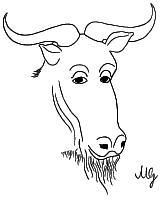
SCO, GNU and Linux – GNU Project – Free Software Foundation (FSF):

SCO’s contract dispute with IBM has been accompanied by a smear campaign against the whole GNU/Linux system. But SCO made an obvious mistake when it erroneously quoted me as saying that ‘Linux is a copy of Unix.’ Many readers immediately smelled a rat–not only because I did not say that, and not only because the person who said it was talking about published ideas (which are uncopyrightable) rather than code, but because they know I would never compare Linux with Unix.

That is the opening of a short but crystal clear article on the SCO business. I respect this man’s integrity and moral clarity. I will never use the prhase “intellectual property” again!

Horror of the US Death Penalty

Save Kevin Cooper
Kevin

WHO IS KEVIN COOPER?
Kevin Cooper is an inmate on death row at San Quentin State Prison. In 1985 he was convicted of the murder of the Ryen family and a houseguest in San Bernadino county. Much evidence has come forward that was never tested or presented before the jury at Kevin Cooper’s trial that could possibly challenge his conviction.

A moving story and I hope something successful can come from this campaign and excellent website.

religion online

religion onlineThis looks like a useful site. Stumbled on it with a Google search – when this item came up From Mimesis to Kinesis: The Aristotelian Dramatic Matrix, Psychoanalysis, and Some Recent Alternati by Ekbert Fass. Here is a quote from the item:

The catharsis concept, then, seems to cover the whole spectrum from Freud’s “cathartic method” of acting out repressed experiences, to psychoanalysis proper purporting to cure the patient by making him understand these experiences as being part of his intelligible, consistent, and unbroken case history. The forces at work on the Aristotelian spectator of tragedy are of a similar nature. Without some display of violence or suffering, of course, no fear and pity can be aroused. But to Aristotle, this is not to be misunderstood in the sense of a theater of cruelty. Those, he writes, “who make use of the Spectacle to put before us that which is merely monstrous . . . are wholly out of touch with Tragedy.”39 Similarly, the best way of handling the deed of horror is found in a play like Cresphontes where Merope, “on the point of slaying her son, recognizes him in time.”40 More important than the actual presentation of violence and suffering is the device of peripety in causing surprise while at the same time letting us recognize what surprised us as an ordered sequence of cause and effect. For the arousal of pity and fear, like the emotions felt in reliving a repressed traumatic scene, will be purged by such hindsight. Aristotelian catharsis and Freudian therapy also share an almost exclusive reliance on discursive language. Just as Freud restricts analysis to the patient’s verbal articulation of his erratic life story towards the logically consistent discourse of his case history, so Aristotle, as already pointed out, prefers to have the cathartic impact of tragedy depend on the spoken word to the exclusion of a spectacle.

The Plot in fact should be so framed that, even without seeing the things take place, he who simply hears the account of them shall be filled with horror and pity at the incidents; which is just the effect that the mere recital of the story in Oedipus would have on one.41

The article goes to the hear of what it is that makes therapy therapeutic. It may even have in it or at least imply what I think is at the heart ofg psychotherapy! Which is that when the emotions of in response to a traumatic scene are aroused, that the traumatised self ‘sees’ that response to his or her trauma, feels seen validated and healed.

This is the final role reversal of most successfully resolved traumatic scenes, where the nurturing is soaked up by the the person while in the tole of the traumatised self.

About double entry accounting

Gnucash:

In grade school this period is called the Renaissance, a flowering of art and intellect, that appeared in Italy for no obvious reason and then spread to the rest of Europe.

Quite why all these geniuses suddenly appear without any warning is not explained by your history teachers (who spend their life pondering deep questions like this), but Jared Diamond (Guns, Germs and Steel, Pub: Norton 1997) is happy to tell you. He says that geniuses like Michealangelo and Einstein are rather commonplace. Most of them are oppressed and are living in abject poverty, and are busy surviving if they even do that. Give them a good feed, treat them well, put them in the company of peers and pretty soon they’ll be coming up with all sorts of things you hadn’t dreamed of.

The Renaissance then was a result of the invention of double entry accounting, not (as we’ve been told) a flowering of intellect and art that happened for no reason at all.

I have been too busy to blog. One thing is that I have been setting up the Accounts for our company “Kate Tapley Horse Treks” – all new to me, but of course I begin to think about the history, philosophy and psychology of accounting – and this page stood out among a Google search. Accounting is a sort of metahorical mirror of life made out of numbers… not really as boring as bean counting.

Christopher Lydon Interviews James Gleick about his book: Isaac Newton

I am downloading the mp3 here:

James Gleick’s lean, lovely biography is a modern account of Newton’s multiple breakthroughs–and then some. Almost everything we know about apples and moons in motion and at rest, about time, space, gravity, inertia, differential and integral calculus, occurred to Isaac Newton in his early twenties, working in isolation through the London plague years of 1665 and 1666. Gleick’s great gift is making this not merely a lucid history of mathematical ideas but also a meditation on the utterly marvelous, a virtually unexplainable genius. In conversation Jim Gleick underlines the great paradox of Newton. Both medieval and modern, the father of the Enlightenment and modern rationalism was also a determined alchemist and an opinionated Unitarian Christian. Gleick’s book rises to the challenge of that same paradox: it is wise science written with humility and awe. Listen in.

While reading Neal Stephenson’s Quicksilver, Gleick’s book looks like it might be interesting.

newton