http://www.artbash.co.nz/article.asp?id=1574
An item on ArtBash, by someone who may or may not be Christopher Moore on the devastation in Christchurch and how it impacts on the art scene.
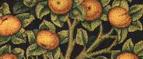
Walter Logeman: Journal
http://www.artbash.co.nz/article.asp?id=1574
An item on ArtBash, by someone who may or may not be Christopher Moore on the devastation in Christchurch and how it impacts on the art scene.
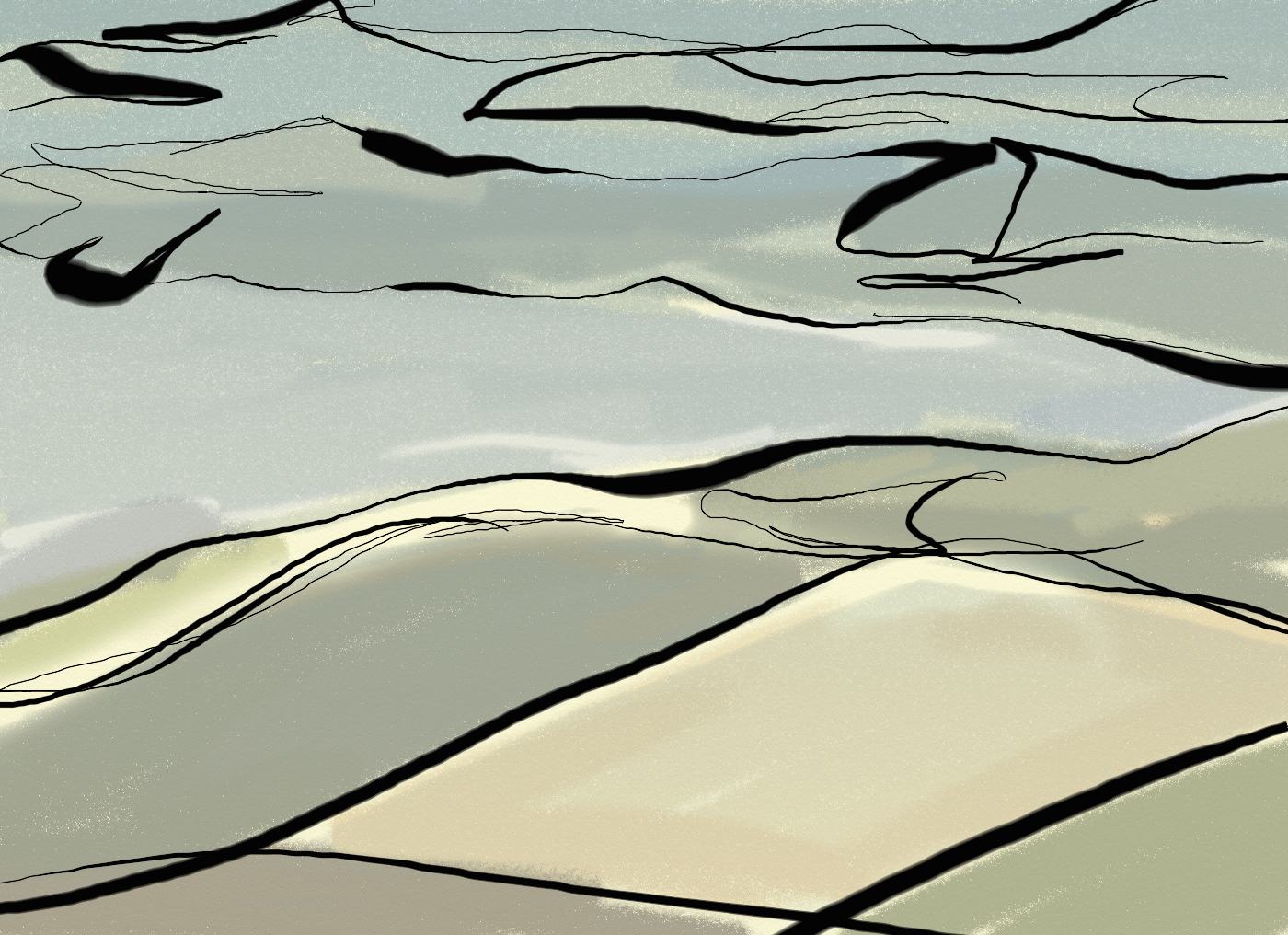
Statements and actions for a cause or revolutionary change are needed, but not art. Art can be revolutionary even while its creators are reactionary in their words. Art is art because it expresses something of the unconscious.
I make politically trivial sketches, Thousand Sketches, (Like the image above) but I think they are ok, even somewhat progressive. I think it is because they are steps on a path into my own unconscious and that is the collective ethos, zeitgeist, at the same time. I don’t know how deep I go. I let the pen do the work, stuff comes unbidden, I trust my life has its roots in the culture and thus something of the culture will emerge.
It is a struggle not to judge it as crap. It is as a result of my scribbling that I discovered an affinity with the abstract expressionists, who do not rank high on the political awareness scale, but I think their roots (check out Mark Toby) in calligraphy and the spontaneity of the body (Pollock’s dance as he paints) may be a way to tune into zeitgeist. It had to do that or it would not even have been capable of being exploited by the art world.
Pollock’s statement “I am nature” makes sense to me. He does not need to look at the world and then paint it, he is nature. Social and political dimensions don’t need to be painted from the outside, they will emerge… with luck through spontaneity, ie the absence of fear and judgement. They will not be pure expressions of one class, art is too specific for that. Art is a slice of time & specific contradictions under a microscope, a probe into what is going on. The interpretation of the data is important, but before interpretation is possible it has to be mined.
These thoughts came up well before finishing this item on Reading the Maps:
Reading the Maps: Alan Brunton and the dream of a revolutionary art:
In a country where the Greens are considered a far left party, and where socialism is presently regarded as an alien political tradition, how can any coherent political programme hope to be popular, or even comprehensible, without being, from a radical left-wing perspective, ‘cowardly’? And in a country where large numbers of people still expect poetry to rhyme, and still consider any visual art movement more recent than Impressionism to be an elitist fraud, how can any self-respecting artist disavow incomprehensibility? Could, say, Colin McCahon or Rita Angus have created their masterpieces without daring to be, for a large segment of the population, incomprehensible?
Great that these are online! I tried to get them out on video with no luck, but here they are.
notes follow
Why do anything? These sketches I do, why? Leaving that question as unknowable, the easier (easy is significant here) question is why do digital sketches?
1. Its easier to erase.
2. They don’t take time to dry.
3. They are easy to store.
4. Its easier to clean up after painting.
If that sounds silly, its not. That is why I’ve come back to digital after giving acrylics a good go. I love the real stuff, but I could not fit it into my life. And there is more:
5. They can be shared widely, easily.
6. They can be printed in different sizes.
7. They can be tweaked easily.
8. I can do them any time anywhere. In bed for example.
9. It is easy to change the background colour.
And here is the clincher:
10. All the reproductions are originals!
Sir Mick Jagger’s lips bought by Victoria & Albert MuseumUpdated: September 23 2008, 9:20 CET

Item follows:
Found this in my jumble. Bought back the memory of that trip to Sydney

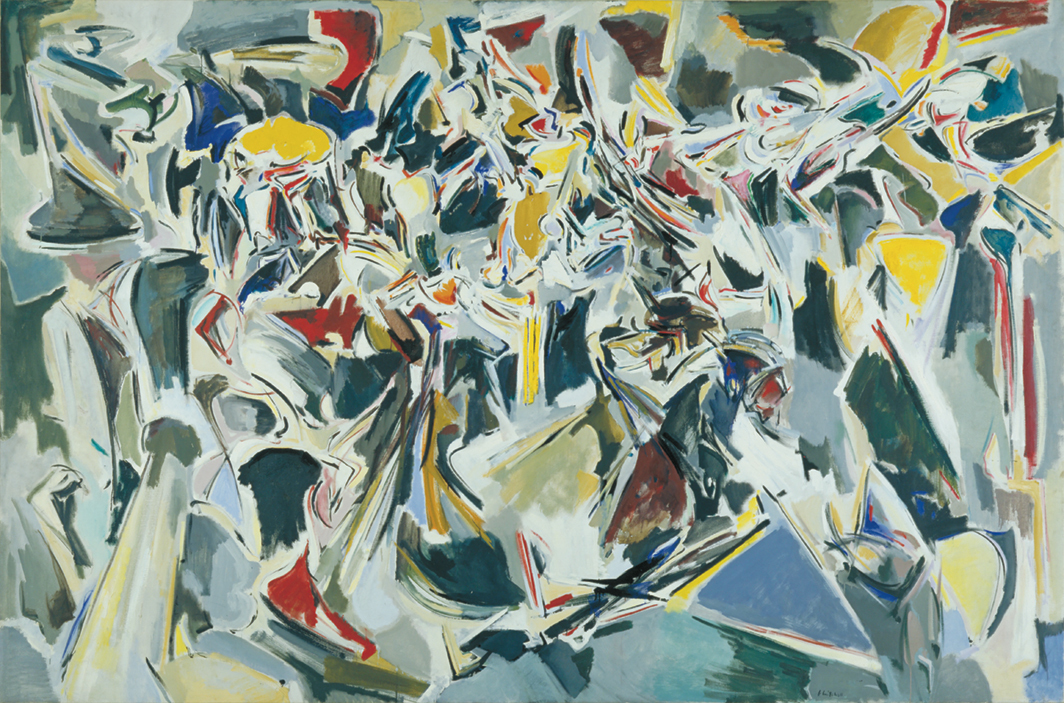
Feature image: Joan Mitchell, Cross Section of a Bridge, 1951, oil on canvas, 79 3⁄4 × 119 3⁄4″. © Estate of Joan Mitchell.
Postage Stamps, Abstract Expressionism and Joan Mitchell:
(dead link)
The ten artists included in the stamp series are Hans Hoffman, Adolph Gottlieb, Mark Rothko, Arshile Gorky, Clyfford Still, Willem de Kooning, Barnett Newman, Jackson Pollock, Robert Motherwell and Joan Mitchell. Joan Mitchell (1925-1992) is the only woman in the group, though her contemporaries Elaine de Kooning, Helen Frankenthaler and Lee Krasner certainly could have found their way to abstract stamp glory as well. Joan Mitchell, however, is a great choice, a unique talent and appealing conversationalist as transcribed here in a 1986 interview with Linda Nochlin. Joan was born in Chicago, went East to Smith College and while there watched Rufino Tamayo paint a fresco in the art library; she returned to Chicago to study at the Art Institute, sojourned to New York then traveled to Mexico and Paris, Cuba and Haiti, then back to New York, though France would eventually become her home base.
Joan Mitchell – Wikipedia, the free encyclopedia:
Joan Mitchell (February 12, 1925 – October 30, 1992) was a ‘Second Generation’ Abstract Expressionist painter. Along with Lee Krasner, Grace Hartigan, and Helen Frankenthaler she was one of her era’s few female painters to gain critical and public acclaim. Her paintings and editioned prints can be seen in major museums and collections across America and Europe.
Another article on Joan Mitchel:
https://www.artforum.com/print/202102/molly-warnock-on-the-art-of-joan-mitchell-85006
❋
Charlotte Park: Abstract Expresionist Paintings, 1950-63 – Hamptons.com:
Charlotte Park: Abstract Expresionist Paintings, 1950-63 — By Exhibition May 25 – June 26, 2006
Charlotte Park
Untitled, ca. 1951
Oil and gouache on muslin, 22 x 30 inches
Signed lower right: C. Park(dead Link to the painting.)
Spanierman Gallery, LLC is pleased to present Charlotte Park: Abstract Expresionist Paintings, 1950-63. Curated by the noted art critic and scholar Ronny Cohen, this exhibition presents the most extensive survey of the Abstract Expressionist art of Park to date, featuring her paintings and drawings from the 1950s through the early 1960s. Many of the works have rarely or never been on view, providing new ways of considering the artist and her oeuvre. A brochure by Cohen discussing Park, her work, and her relationship within the context of the Abstract Expressionist movement accompanies the exhibition.
Park’s dynamic all-over style of composition, with its rich repertory of abstract shapes and bold imaginings, made its appearance in the early 1950s. From the beginning she put her own personal stamp on Abstract Expressionism, demonstrating through her art how profoundly well she understood the character of the movement and its means for reshaping reality and for discovering the essence of form and content. The irregular shapes appearing initially in Park’s works have as a general antecedent, the animated forms in the emergent Abstract Expressionist paintings of the late 1940s, such as those of Mark Rothko. Eventually Park evolved these shapes into a central feature of her painterly vocabulary, and the paintings in gouache that she created in the mid-1950s, in which references to nature on eastern Long Island appear, are revealing of the emblematic kinds of meaning with which she endowed her art. The wavy lines and twisty organic shapes in her works can be seen as the marks of a lively and commanding gestural hand, while the way that these forms sweep across the brilliant surfaces of a number of her gouaches of the mid-1950s can also be taken as the fascinatingly reductive signs of the ocean, bay, and countryside of Long Island.
❋
Later
Tuesday, 07 September 2021
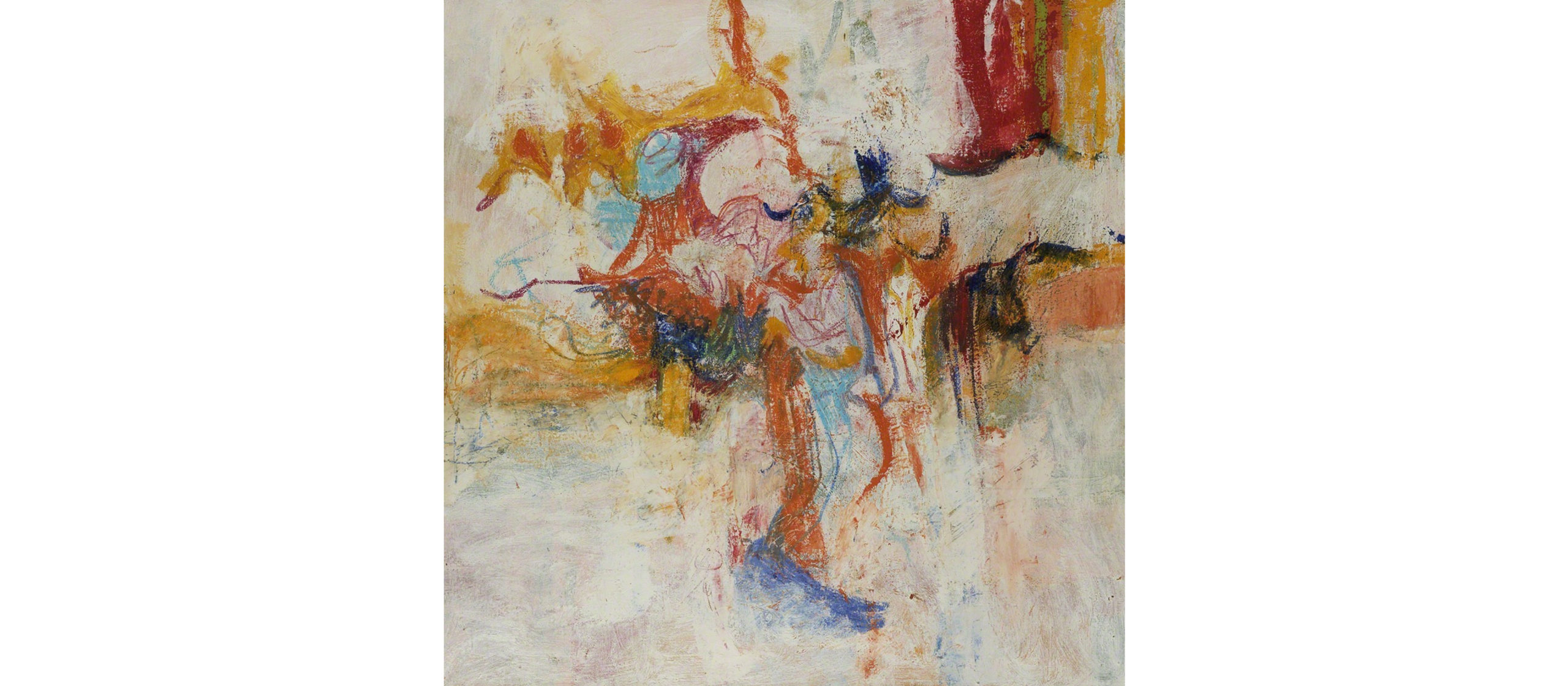
Untitled, ca. 1959
Oil and oil crayon on canvas
30 1/4 × 30 1/4 in
76.8 × 76.8 cm
I wrote a bit on my Psyberspace blog after I did the last three sketches. Here is a quote:
Tools evolve, and the best use of any given tool is of value. I have done a lot of sketching on my Palm PDAs – tool I’ll never use again – but therein lies something of value. The lead pencil has no colour. But look what has been done over the centuries with the humble pencil, and it lives. The current – no pressure iPad will die and be gone, but I look forward to making use of it, while it is in its first iteration. What can the finger do on that thing?
Here are some examples, some good stuff there.

#0926 Urban Rhythm
Larger Image.
This is sketch number 0926 in my Thousand Sketches project (2006-7) I stumbled upon it today on my Bio Page and I liked it a lot, (often I don’t like work years later, though at the time my latest is always my favourite) It’s has that calligraphic touch, it name suits: Urban Rhythm. I now include it in the current calligraphic series.
It is for sale on Felt, its been in several small exhibitions.

[private role=”administrator”]
Text for administrators
1/25 an a3+ I have it in one of the folders
August 1, 2010 (aprox) Sold on felt for $95 A3
[/private]
