
Generation txt and Class

The paper by Vicente Rafael, Professor, Department of Communication, University of California, San Diego states ”This is a work in progress; please do not quote from this draft or cite without the author’s permission. I welcome feedback; please feel free to e-mail me at vrafael@weber.ucsd.edu.” I have emailed and asked permission to link and quote – will remove if not granted. I link this because I have the question on my mind about the class nature of info tech generally, about its impact as part of the forces of production, but also about the use of communications, does it impact what actually happens in a qualitative way. Does a better linked crowd become more revolutionary or just more potent? How does the flatness of the net impact on leadership? Does the group have a life of its own and can we trust it? Vicente L Cell Phone and the Crowd

From the perspective of Generation Txt, a certain kind of crowd comes about in response to texting. It is one that bears, in both senses of that word, the hegemony of middle class intentions. Texting in its apolitical mode, sought to evade the crowd. But in its reformist mode, it is credited with converting the crowd into the concerted movement of an aggrieved people. In the latter case, the middle class invests the crowd with a power analogous to their cell phones: that of transmitting their wish for a moral community, whereby the act of transmission itself amounts to the realization of such a community. Such a notion assumes the possibility of endowing the crowd with an identity continuous with that of middle class texters. However, this assumption had another aspect. Not only did it lead to the fantasy of ordering of the masses under bourgeois direction. As I demonstrate below, the middle class interest in ordering the crowd also tended to give way to a different development. At certain moments, we also see the materialization of another kind of desire this time for the dissolution of class hierarchy altogether. How so?

Wired 3.06: A Globe, Clothing Itself with a Brain

Classic Wired from 1995. I recall reading this at the time and feeling annoyed with myself that I had not written it, as I thought along these lines in 1992. Now I don’t really mind 🙂 writing is hard. There are about a hundred links in Google to Jennifer Cobb Kreisberg and they all reference this one article!

An obscure Jesuit priest, Pierre Teilhard de Chardin,set down the philosophical framework for planetary, Net-based consciousness 50 years ago.
By Jennifer Cobb Kreisberg

linuxodyssey – New Phase

Here is my message to linuxodyssey on Yahoo, where I have chronicled my free software adventures.

New Phase, lets call it phase 3. The first was my go at Debian way back in July 1999. Then Mandrake 8.1 on the Dell, which ended with severe problems. Now Red Hat 7.3

xrefer – dialectical materialism

xrefer Came up with this item on dialectical materialism. Just a standard encyclopeadia item really, but what a great little search engine for when you want a classic encyclopaedia entry!

… the basic aims and principles of dialectical materialism remain very much in harmony with the fundamental spirit of progressive, rational scientific thought, which continues to perceive a fundamental opposition between scientific theories and religious myths, to address the scientific challenges posed by the failure of the seventeenth- and eighteenth-century mechanistic programme, and to seek a scientific metaphysics as the basis for an enlightened view of the world.

The Spam Has Got To Go

Well said by John Patrick. He has a solution, digital ID, which may happen one day – I don’t know. However here are some simple steps I use and which are OK, and if enough people use them then spammers will be more discouraged:

  • Create a folder called Friends and create filters for each trusted friend – that way you instantly see new mail you want to read – not one spam item will go into that folder.
  • Create a folder and filter for each group or mailing-list you subscribe to. This makes groups much easier to belong to and each one spam free.
  • Make a new Inbox called MyInbox or something like that. Set up a filter and put all mail addressed to you personally or cc-ed to you into MyInbox. Note that these filters should have a slighty lower priority than the Friends filter. This folder will still get some spam, but a big swag will be in the other Inbox, which should have nothing but spam, but will still need checking occasionally.
  • Create a Junk folder and filter spam to that folder (especially those addressed to you personally) – you will get quick at creating filters – a couple of seconds. This spam by spam filtering is the most work for the least gain, but for all that my machine now catches 5 to 10 posts a day without me needing to do a thing.

Howard Rheingold’s new book: Smart Mobs

Edge: SMART MOBS

The big battle coming over the future of smart mobs concerns media cartels and government agencies are seeking to reimpose the regime of the broadcast era in which the customers of technology will be deprived of the power to create and left only with the power to consume. That power struggle is what the battles over file-sharing, copy protection, regulation of the radio spectrum are about. Are the populations of tomorrow going to be users, like the PC owners and website creators who turned technology to widespread innovation? Or will they be consumers, constrained from innovation and locked into the technology and business models of the most powerful entrenched interests?

HOWARD RHEINGOLD: SMART MOBS [7.16.02]

Yousuf Karsh

Yousuf Karsh

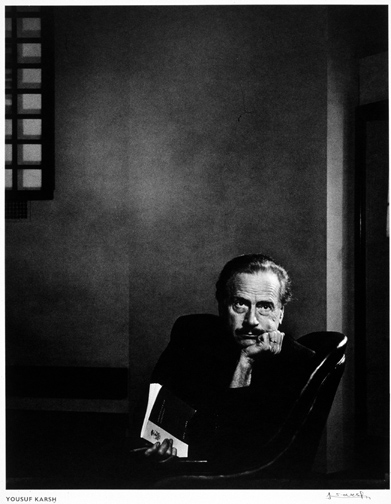
The news of the death of Yousuf Karsh led me to the amazing Google Image search led to Peter Fetterman Gallery : Yousuf Karsh where the images here, just a sample, come from. They are for sale for thousands of dollars. Wonderful to see them here on the Net. Here is a quote from IHT:

Working with a large-format view camera and a battery of artificial lights (he was said to carry 350 pounds – nearly 160 kilograms – of equipment on his trips abroad) he aimed, in his own words, “to stir the emotions of the viewer” and to “lay bare the soul” of his sitter. (NYT)

SHS ArtWeb: Photography – Yousuf Karsh – Nice selection with links to big images.
Yousuf Karsh on the Internet


Pablo Picasso

Karsh - Winston Churchill

Albert Einstien

Our life is not of our making, it is of our allowing.

This is not a link at all. It is a snippet from my Palm, one that as far as I know, I wrote though can’t really recall doing so! I like it and it is central to my philosophy.

Anything can be imagined, yet sometimes the mind is blank and nothing will come or it repeats the same image over and over. Imagination takes work, work to *allow* the images to present themselves. Yet if they present themselves, what do we have to do with their creation? What emerges from the void is not of our making but of our allowing. The emergence of experience is an autonomous process like the breath. We can stop and start it, allow it, but in the end it is life for ever re-emerging in us. Our life is not of our making, it is of our allowing.

Our experience of meaning is out of our hands, it is generated through a web or a net of previous givens.

Jung bit

I am tidying snippets off my Palm like this one from a NewsScan Daily. Sticking it all on the web is the way for me to build my memory.

And what is the collective unconscious? It’s a level of awareness
below that of one’s personal unconscious, and is unknowingly shared by
people across different traditions and cultures. At this level Jung saw
“archetypes” of demons, sages, dreams, etc. common to all humankind and all
human history.