Creativity Encounter

I am somewhat disturbed by the Hellinger material I read. However there new clarity around the creativity inherent in dialogue (see the last Bhom quote in this post.)

Here are two snippets which I find illuminating. Especially if we hold in mind that reality includes an observer.

No two people can have the same insight about the same thing. If they both have an insight about the same thing, that of one differs slightly from that of the other.

… when awareness meets awareness both are enhanced by the encounter.

Hellinger

That “enhancment” is the new, something is created.


Later: Sunday, 6 December 2015

Why two way sends are useful: difference – enhancement of the relationship – creativity i.e. Newness. Spontaneity? The Visitor/Host creates Love Maps, heals, and role development in the listener.

The Call to Play

I have been assisting some people to connect online, and to participate in online groups. blog. This is a post for people who are computer shy. “Not technical”. Hate computers. Feel stupid around computers. Wish we were back with no email, and vinyl disks.

Perhaps one of the reasons kids can do this more easily than older people is that they play. If you want to paint you need to finger paint, mix colours, try texture, play with what you have. One pencil and some paper is enough.

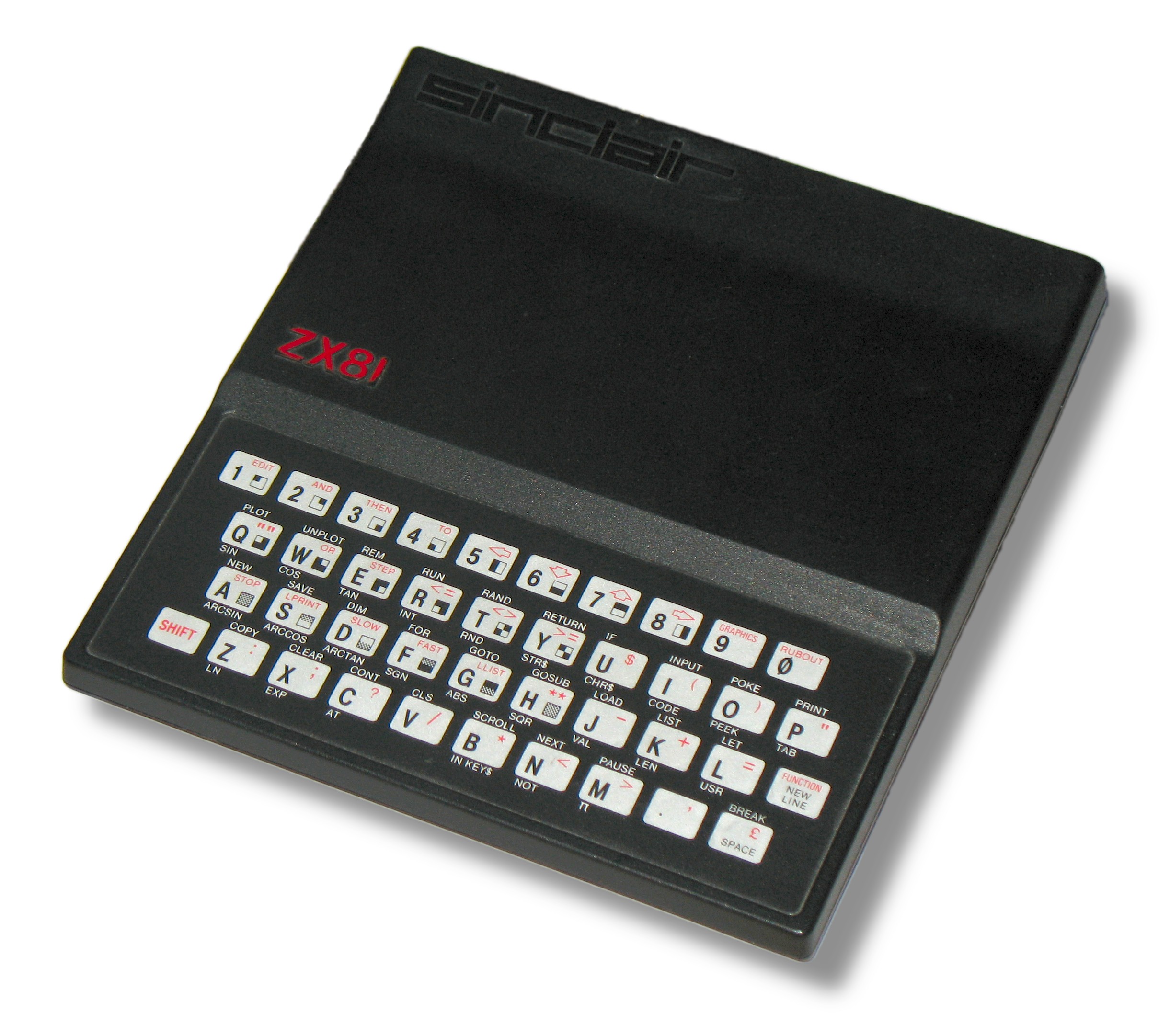
I was older but got into computers through play on a ZX81 (my father’s gift to his grandson). Later when the phone got involved the main play was a game of connect. Like having two tin cans and string.
Before you can use this medium in a creative way… play. Play till you know what ctrl a and ctrl b and ctrl c, v, x, z, n, u, can do! (Are there any more of those?)

Who reads manuals? Occasionally maybe, but mostly I play. I might try every item on the menu to see what it does. I look for a buddy who likes to play and send tests, I fire a question into Google rather than look at a manual, then there is a chance of some serendipity, a conversation.

One step leads to the next, but too often people want to miss the play step, and go straight to the work step. Then it becomes painful.

Even if you are scared of it… hate it, you can play. Think of a child hiding behind their mother’s skirts when there is something scary… they still peep out, they look. Then they might take a step. And children play together.

A computer course might help… but it is often that something will work when you are taught on another computer & then at home you can download the right software. Pain! Passwords don’t work! Pain. How much of that sort of pain do you need before you quit?

It is all about levels. Like levels in a computer game. Level 1. Switch it on. Level 2. Get connected. Level 3, do something you want to do. Those levels might involve quite a bit of play! Phone call play. Finding a buddy play. Trial & error play. Playing with the crap that comes up on a new laptop. Deleting it. Where are things stored? Installing Google Desktop so you can find things, setting up the virus checker. If all that stuff is tedious… boring scary… how can you play? If it is a series of levels to get through… maybe it is fun.

It is fun for me, and for many people I know, and almost the opposite for others. Is it a gene?

I had the extra incentive that there was a spell checker on my Commodore64, it liberated me from dyslexia. That was a strong incentive to play. Another thing is that I find the net, the cyberworld, where ideas live, alluring. Before the net I was a reader, and I am still. A hyper-reader, I learn about the next book from the one I am currently reading, links. Always hungry for the next book. A craving to be on the edge of the known & the unknown.

Here is one idea… don’t try to achieve anything at all. Look at this thing in front of you; not this post, not your computer, but this window into worlds unchartered. What is alluring? Nothing… Ok, try again, don’t pay attention to the fears, the doubts the, critique… focus on what is alluring… can you hear the call at all?

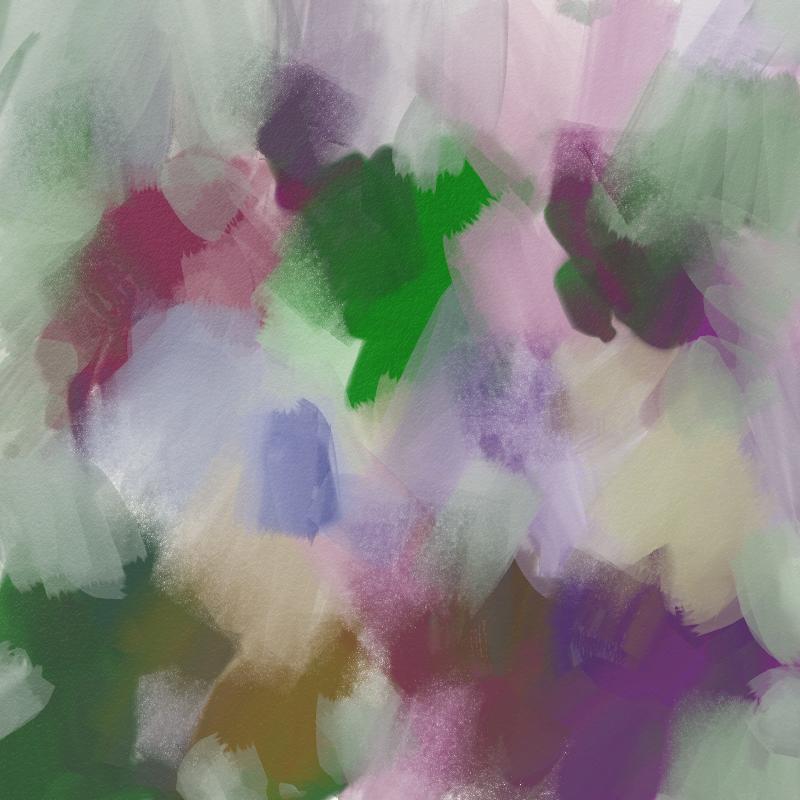
P.S. the image above was the result of five minutes play in ArtRage 2. I am called to that!

Telephone brings back drawing – Hockney

Hockney is making iSketches! Great.

Here he is in one of my digital efforts!

This is one of his iPhone images. Found it here, plenty more there.

Later:
OOOpsss! Apparently these are not iphone but done on a tablet.

There are several drawings of Hockney’s brother, Paul, and his sister, Margaret; and in each picture the subjects seem mesmerised by a small gadget in their hands, which turns out to be an iPhone — Hockney’s latest enthusiasm: “Yes, my brother and sister sat there for three or four hours, totally engrossed.” Hockney is thrilled that he has finally persuaded Celia Birtwell to buy one so that he can send her pictures: “I draw flowers on them and send them out every morning to a group of people.”

He demonstrates, tracing his finger over the tiny screen with such absorption that I worry he will stop talking altogether. “Who would have thought the telephone would bring back drawing?” he exclaims with glee.

“It’s such a great little device, it has every Shakespeare play in it and the Oxford English dictionary. In your pocket! But it’s also amusing, look at this.” He blows into it and his new toy becomes a harmonica.

Newsletter June 2009


Walter’s Art News

June 2009

Hello Everyone

Welcome to the my Art News, first one for the year! Note that I have changed the way I send these. Please let me know how it looks on your computer or phone.

Continue reading “Newsletter June 2009”

Eric Voegelin & Participatory Consciousness

quoted in

The Philosopher and the Storyteller
By Charles R. Embry

The symbols do not refer to structures in the external world but to the existential movement in the metaxy from which they mysteriously emerge as the exegesis of the movement in intelligibly expressive language. Their meaning can be said to he understood only if they have evoked in the listener or reader the corresponding movement of participatory consciousness. Their meaning, thus, is not simply a matter of semantic understanding; one should rather speak of their meaning as optimally fulfilled when the movement they evoke in the recipient consciousness is intense and articulate enough to form the existence of its Human bearer and to draw him, in his or her turn, into the loving quest of truth.

google books

Amazon

I found it fascinating that through the words participatory consciousness the dialogue and archetypal psychology – with its notion of metaxy come together.

Careful reading of the passage points to the responsibility of the sender. Sending might involve beauty. In imago we are asked to listen to some ugly sends! Fair enough, but what if they were works of art?