
The Spam Has Got To Go

Well said by John Patrick. He has a solution, digital ID, which may happen one day – I don’t know. However here are some simple steps I use and which are OK, and if enough people use them then spammers will be more discouraged:

  • Create a folder called Friends and create filters for each trusted friend – that way you instantly see new mail you want to read – not one spam item will go into that folder.
  • Create a folder and filter for each group or mailing-list you subscribe to. This makes groups much easier to belong to and each one spam free.
  • Make a new Inbox called MyInbox or something like that. Set up a filter and put all mail addressed to you personally or cc-ed to you into MyInbox. Note that these filters should have a slighty lower priority than the Friends filter. This folder will still get some spam, but a big swag will be in the other Inbox, which should have nothing but spam, but will still need checking occasionally.
  • Create a Junk folder and filter spam to that folder (especially those addressed to you personally) – you will get quick at creating filters – a couple of seconds. This spam by spam filtering is the most work for the least gain, but for all that my machine now catches 5 to 10 posts a day without me needing to do a thing.

Howard Rheingold’s new book: Smart Mobs

Edge: SMART MOBS

The big battle coming over the future of smart mobs concerns media cartels and government agencies are seeking to reimpose the regime of the broadcast era in which the customers of technology will be deprived of the power to create and left only with the power to consume. That power struggle is what the battles over file-sharing, copy protection, regulation of the radio spectrum are about. Are the populations of tomorrow going to be users, like the PC owners and website creators who turned technology to widespread innovation? Or will they be consumers, constrained from innovation and locked into the technology and business models of the most powerful entrenched interests?

HOWARD RHEINGOLD: SMART MOBS [7.16.02]

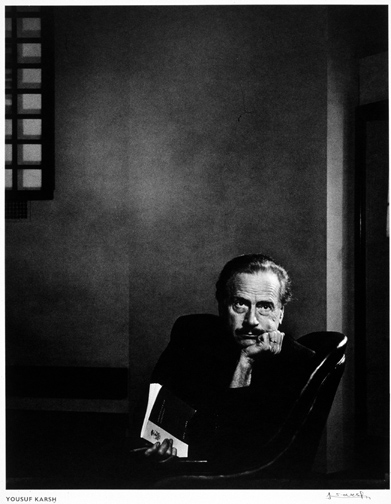
Yousuf Karsh

Yousuf Karsh

The news of the death of Yousuf Karsh led me to the amazing Google Image search led to Peter Fetterman Gallery : Yousuf Karsh where the images here, just a sample, come from. They are for sale for thousands of dollars. Wonderful to see them here on the Net. Here is a quote from IHT:

Working with a large-format view camera and a battery of artificial lights (he was said to carry 350 pounds – nearly 160 kilograms – of equipment on his trips abroad) he aimed, in his own words, “to stir the emotions of the viewer” and to “lay bare the soul” of his sitter. (NYT)

SHS ArtWeb: Photography – Yousuf Karsh – Nice selection with links to big images.
Yousuf Karsh on the Internet


Pablo Picasso

Karsh - Winston Churchill

Albert Einstien

Our life is not of our making, it is of our allowing.

This is not a link at all. It is a snippet from my Palm, one that as far as I know, I wrote though can’t really recall doing so! I like it and it is central to my philosophy.

Anything can be imagined, yet sometimes the mind is blank and nothing will come or it repeats the same image over and over. Imagination takes work, work to *allow* the images to present themselves. Yet if they present themselves, what do we have to do with their creation? What emerges from the void is not of our making but of our allowing. The emergence of experience is an autonomous process like the breath. We can stop and start it, allow it, but in the end it is life for ever re-emerging in us. Our life is not of our making, it is of our allowing.

Our experience of meaning is out of our hands, it is generated through a web or a net of previous givens.

Jung bit

I am tidying snippets off my Palm like this one from a NewsScan Daily. Sticking it all on the web is the way for me to build my memory.

And what is the collective unconscious? It’s a level of awareness
below that of one’s personal unconscious, and is unknowingly shared by
people across different traditions and cultures. At this level Jung saw
“archetypes” of demons, sages, dreams, etc. common to all humankind and all
human history.

America’s Pipe Dream

Want to keep this link handy, an article by George Monbiot who seems a reliable source of info:

But Afghanistan’s strategic importance has not changed. In September, a few days before the attack on New York, the US Energy Information Administration reported that “Afghanistan’s significance from an energy standpoint stems from its geographical position as a potential transit route for oil and natural gas exports from Central Asia to the Arabian Sea. This potential includes the possible construction of oil and natural gas export pipelines through Afghanistan.” Given that the US government is dominated by former oil industry executives, we would be foolish to suppose that a reinvigoration of these plans no longer figures in its strategic thinking. As the researcher Keith Fisher has pointed out, the possible economic outcomes of the war in Afghanistan mirror the possible economic outcomes of the war in the Balkans, where the development of “Corridor 8”, an economic zone built around a pipeline carrying oil and gas from the Caspian to Europe, is a critical allied concern.

Jack Lule: Myth as Filter

An excerpt from: OP-ED | Lule: Myth In Journalism Which makes sense of one aspect of the process of finding stuff online. The conversational part is not made all that clear here, but is implicit. (See my earlier item for continuity.)

As Myth, News Will Be Crucial But Conflicted In An Online World
Myth and the new technology may seem to be an unlikely pair. But we have already seen that myth has adapted to every storytelling medium from tribal tales to cable television. The new technology is no different. The combination of myth and online news, though, will produce intriguing, paradoxical, perhaps ominous, results.

The information model of journalism, already in great disrepair, will be dismantled by the marriage of myth and new media. News is losing whatever franchise it had on whatever information is. Information is no longer some scarce resource, a commodity that newspeople can cull and sell. Our society rapidly moved from information explosion to information overload. Information is everywhere. From online events calendars to live, continuous congressional coverage, anyone can give and get information online. If news is only information, news is nothing.

Yet information overload offers opportunities to news: as myth. In the throes of all this information, the need for myth increases. People grapple with the meaning of rapidly changing times. People seek out ways in which they can organize and explain the world. People need stories. Myth has long played these roles. Myth has identified and organized important events in the lives of individuals and societies. Myth has interpreted and explained the meaning of the past, the portents of the future. Myth has offered the stability of story in unstable times.

Decades ago, Marshall McLuhan foresaw the increasing need for myth to organize experience in the face of information overload. “You cannot cope with vast amounts of information in the old fragmentary classified patterns,” he told literary critic Frank Kermode in a 1964 interview. “You tend to go looking for mythic and structural forms in order to manage such complex data, moving at very high speeds.”

Autonomous psyche

A page on my own site… full of good intentions, but forgotten. Perhaps linking it here will help. Remind me to update the Writing index. I am now doing all my writing on the web, though I keep some files unlinked.

I am collecting snippets here on the autonomous nature of the psyche or soul.