Woutertje Pieterse

My dutch name is Wouter.  I anglicised it myself in 1952, when I was about 8. I have been reflecting on how easily I made that transition to becoming a little Australian kid. On the one hand it was a good thing, I fitted in reasonably well. On the other I faked not being Dutch, I learned to cut off a whole other Dutch/Australian life. I built a wall dividing two cultures.

I was named after Woutertje Pieterse in a book by Multatuli. Researching that!  Here is an image of the character I was named after!


Van Gogh Museum – Jan Kruis tekent Woutertje Pieterse:  (DEAD LINK)

Het Van Gogh Museum toont de originele schilderijen en tekeningen die striptekenaar Jan Kruis vervaardigde voor de geïllustreerde versie van Multatuli’s Woutertje Pieterse. Aanleiding voor deze tentoonstelling is de presentatie van dit boek, uitgegeven door De Bezige Bij.

Woutertje Pieterse gaat over de onbevangen, maar onbegrepen Woutertje die opgroeit in een kleinburgerlijk 19de-eeuws milieu in Amsterdam. Als hij leest over de roverhoofdman Glorioso en van zijn leraar, Meester Pennewip, de opdracht krijgt een gedicht te maken, wordt hij geïnspireerd tot het Rooverslied. De inhoud daarvan schokt zijn familie en kennissen hevig. Met vele andere levendige gebeurtenissen en treffende personages geeft Multatuli zo een mild-satirische beeld van het bekrompen 19de-eeuwse burgerdom. Tegelijkertijd schetst hij een boeiend psychologisch portret van een kind, iets dat in zijn tijd uniek was.

https://en.wikipedia.org/wiki/Multatuli


Eduard Douwes Dekker - 001.jpg

Dharawal State Conservation Area

Further info re previous post:  I hope the National Parks and Wildlife Service has some clout and can be effective to stop coal mining in this area.

DECC | Dharawal State Conservation Area:

A beautiful and distinctive network of creeks, including the ecologically important O’Hares Creek catchment, make Dharawal a special place to visit. Swim in the peaceful creeks and rock pools, enjoy the superb waterfalls, or ride your mountain bike on signposted trails in the park. Birdwatchers will love the prolific bird life.

Mining threat: Dharawal land and rock art

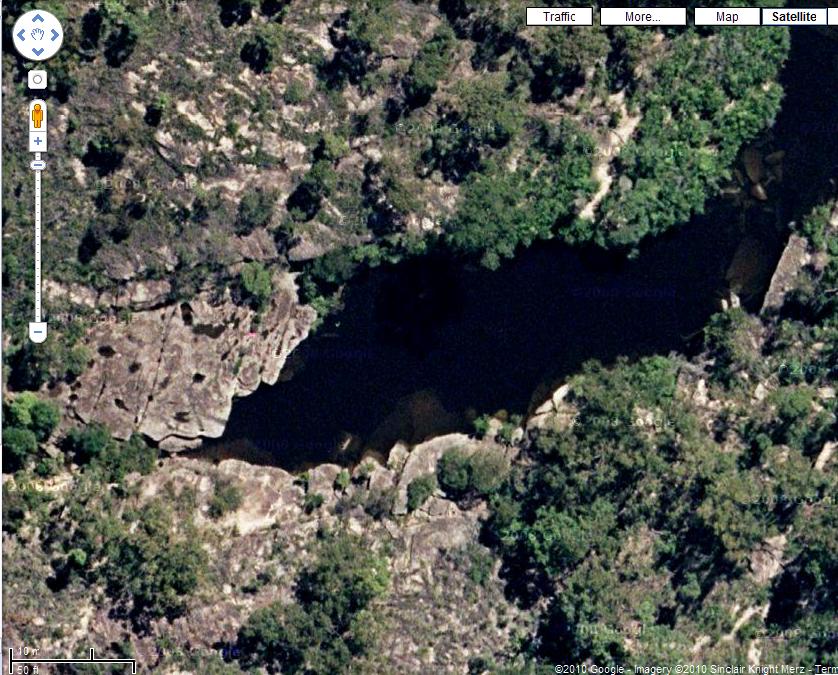
Sharyn Cullis the secretary of the Georges River environmental alliance (left) and Pat Durman an executive member of the National Parks Association (NPA) Macarthur branch (right) swims in O'Hares Creek, at a swimming spot called Cobong in the Dharawal State Conservation area

Among the state’s cleanest creeks … Sharyn Cullis and Pat Durman swim in O’Hares Creek in the Dharawal State Conservation Area. Photo: Kate Geraghty

Preposterous that coal mining could destroy this region!

This pool is just like the one where spent the endless summers of my childhood, Heathcote Creek, a tributary of the Woronora River, like O’Hare’s Creek a tributary of the George’s River. I am only recently learning about the Dharawal aboriginal people who are connected to this land.

I am reading: Rivers and Resilience: Aboriginal People on Sydney’s George River (I’ll post more later about that book)

I am outraged by the proposals to destroy these areas. This must be stopped. I hope that there is a massive opposition to these offensive plans. Please comment if you know of petitions, or campaigns.

Mining ‘threat to swamps and rock art’:

Resistance is growing to coalmine plans, writes Ben Cubby.

Full article from the SMH follows:
Continue reading “Mining threat: Dharawal land and rock art”

The Kidnapping of Haiti

On Radio New Zealand news today there was a report of violence in the street and looting in Haiti, they made it sound as if the Haitians were the problem, gang violence, terrorism even, and the US were there to help. I know this is pure twisted reporting, part of an empire building strategy that we get such news. But it is so easy to sound like a conspiracy theorist, even to myself.

Then, the following items bring a more sane perspective:
I listened to:

Democracy Now

This daily report is so valuable, and essential listening IMO for anyone wanting to know what’s happening in the world. Just excellent journalism.

I listened to Cameron Reilly doing a useful synopsis of

Haiti’s history

Looks like he will have more Podcasts coming on this theme.

I like Naomi Klein’s Shock Doctrine site.

Am editing this post – Monday, 8 February, 2010 – to add this link from socialistworker.org – jus reading it makes it clear how Orwellian the neoliberal language for imperialism is: re-construction, healing, reform. Yeah Right!

The “shock doctrine” for Haiti | SocialistWorker.org:

With its intervention in Haiti, the U.S. is sending a signal to the rest of Latin America and the Caribbean–where masses of people have rejected neoliberalism and elected reform socialist leaders like Hugo Chávez, who aim to tame the excesses of capitalism and pass reforms to address social needs.

and read this Pilger item:

ITV – John Pilger – The kidnapping of Haiti:

The theft of Haiti has been swift and crude. On 22 January, the United States secured “formal approval” from the United Nations to take over all air and sea ports in Haiti, and to “secure” roads. No Haitian signed the agreement, which has no basis in law. Power rules in an American naval blockade and the arrival of 13,000 marines, special forces, spooks and mercenaries, none with humanitarian relief training.

The airport in the capital, Port-au-Prince, is now an American military base and relief flights have been re-routed to the Dominican Republic. All flights stopped for three hours for the arrival of Hillary Clinton. Critically injured Haitians waited unaided as 800 American residents in Haiti were fed, watered and evacuated. Six days passed before the US Air Force dropped bottled water to people suffering thirst and dehydration.

Full item follows
Continue reading “The Kidnapping of Haiti”

Being in Nothingness Virtual Reality and the Pioneers of Cyberspace

Being in Nothingness Virtual Reality and the Pioneers of Cyberspace:

Being in Nothingness Virtual Reality and the Pioneers of Cyberspace

“Cyberspace. A consensual hallucination experienced daily by billions of legitimate operators, in every nation…A graphic representation of data abstracted from the banks of every computer in the human system. Unthinkable complexity. Lines of light ranged in the nonspace of the mind, clusters and constellations of data. Like city lights, receding…”

–William Gibson, Neuromancer

Suddenly I don’t have a body anymore.

All that remains of the aging shambles which usually constitutes my corporeal self is a glowing, golden hand floating before me like Macbeth’s dagger. I point my finger and drift down its length to the bookshelf on the office wall.

I try to grab a book but my hand passes through it.

“Make a fist inside the book and you’ll have it,” says my invisible guide.

I do, and when I move my hand again, the book remains embedded in it. I open my hand and withdraw it. The book remains suspended above the shelf.

I look up. Above me I can see the framework of red girders which supports the walls of the office…above them the blue-blackness of space. The office has no ceiling, but it hardly needs one. There’s never any weather here.

Donna Haraway – Links

Donna Haraway – Wikipedia, the free encyclopedia:

Donna Haraway Donna Haraway with Cayenne, 2006; photograph by Rusten Hogness

Wired Interview:

You Are Cyborg By Hari Kunzru

For Donna Haraway, we are already assimilated. The monster opens the curtains of Victor Frankenstein’s bed. Schwarzenegger tears back the skin of his forearm to display a gleaming skeleton of chrome and steel. Tetsuo’s skin bubbles as wire and cable burst to the surface. These science fiction fevered dreams stem from our deepest concerns about science, technology, and society. With advances in medicine, robotics, and AI, they’re moving inexorably closer to reality. When technology works on the body, our horror always mingles with intense fascination. But exactly how does technology do this work? And how far has it penetrated the membrane of our skin?

The answers may lie in Sonoma County, California. It’s not the most futuristic place in the world; quite the opposite. The little clusters of wooden houses dotted up and down the Russian River seem to belong to some timeless America of station wagons and soda pop. Outside the town of Healdsburg (population 9,978), acres of vineyards stretch away from the road, their signs proudly proclaiming the dates of their foundation. The vines themselves, transplants from Europe, carry a genetic heritage far older. Yet this sleepy place is where visions of a technological future are being defined. Tucked away off the main highway is a beautiful redwood valley. Here, in a small wooden house, lives someone who says she knows what’s really happening with bodies and machines. She ought to – she’s a cyborg.

Donna Haraway: A Cyborg Manifesto

Haraway_CyborgManifesto.html:

Donna Haraway, “A Cyborg Manifesto: Science, Technology, and Socialist-Feminism in the Late Twentieth Century,” in Simians, Cyborgs and Women: The Reinvention of Nature (New York; Routledge, 1991), pp.149-181. AN IRONIC DREAM OF A COMMON LANGUAGE FOR WOMEN IN THE INTEGRATED CIRCUIT This chapter is an effort to build an ironic political myth faithful to feminism, socialism, and materialism. Perhaps more faithful as blasphemy is faithful, than as reverent worship and identification. Blasphemy has always seemed to require taking things very seriously. I know no better stance to adopt from within the secular-religious, evangelical traditions of United States politics, including the politics of socialist feminism. Blasphemy protects one from the moral majority within, while still insisting on the need for community. Blasphemy is not apostasy. Irony is about contradictions that do not resolve into larger wholes, even dialectically, about the tension of holding incompatible things together because both or all are necessary and true. Irony is about humour and serious play. It is also a rhetorical strategy and a political method, one I would like to see more honoured within socialist-feminism. At the centre of my ironic faith, my blasphemy, is the image of the cyborg.

Amazon.com: The Haraway Reader (9780415966894): Donna Haraway: Books:

An excellent introduction to the writings of Professor Haraway, but also a necessary addition to her previous books. (It is nice to find essays once only located in various anthologies now within the same book!) The new essays on dogs and kinship are stellar, illustrating how Harway’s work is moving forward to advance the study of science and politics in everyday life contexts. A must read in cultural studies, feminist theory, and the history of race and ethnicity.

Book: Reload: Rethinking Women + Cyberculture

Cyberspace—Land of Cyber Cowboys and Women Outlaws – UB Reporter:

They speak their minds in “Reload: Rethinking Women + Cyberculture” (MIT Press, 2002), a groundbreaking collection of theoretical and fictional writing, including cyberpunk, edited by Austin Booth, a senior assistant librarian at UB, and Mary Flanagan, professor of art at the University of Oregon and former UB faculty member.

In it, 27 authors consider the effects of rapid and profound technological change on culture and, in particular, the revolutionary and reactionary effects of cyberculture on women’s lives and identities.

They examine how conceptions of gender are embodied in different technologies and how those, in turn, shape our notions of maleness and femaleness. Their observations are quite explicit, ranging from the use of language in technology to the presentation of women in cyberpunk fiction.

The contributors include women who have lived in some province of the cyberworld as early as the 1930s. Most are contemporary scholars and authors who are up to speed on advanced technology, neuropolitics, culture jamming and the latest technobuzz.

 Booth frequently publishes in refereed journals on women in cyberspace and information studies, and currently is working on a book titled “Bodies at Work: Women’s Work in Cyberfiction, Cyberculture and Cyberfeminism.” Flanagan is the author of a number of articles on gender and narrative in virtual worlds and has produced many innovative media projects, including Internet games, a networked version of the phage computer virus and “Career Moves,” a computer-controlled board game that explores ideas about women and work.

Amazon

Compressionism II

AtomJack, 1998, has a lot insight.  I go on to riff on the compression webpage. and then link & quote.

“we all have different internal filters”

That sums up Gregory Bateson Korsybsi talk.

And now compression has taken new leaps, do less with less

words are compressions – coex systems

Tweets!

tools that do less – Kindle  iPad

“small pieces loosely joined”

the joining is not linear though, joined across isomorphic information systems.

Each small piece is a map and a portal of a territory.

And each territory a map of another larger territory.

Russian dolls

fUSION Anomaly. Compressionism:

“keep it dense. keep it in-tense.”

fuck, okay. “you are what you cache”. or, to codify it: REMEMBER, you are what you cache”. taking this form, we bring as much as we can with us (pack rats), but the problem with clutter is that it’s bulky. not very efficient.

digital trance formation… information in formation… to streamline, we digitize. paper, images, sound, etc. there’s a ton of  information in hi resolution images and sound. but storage and internal link processing power is growing and so far has no limits.

brute force is not a problem. but in the meantime, and this is exemplified by slim systems like palmtops, embedded systems, “elegant coding” for pda’s, etc. demos.. this is all training for elegant, efficient, schemes.. but for what… compressions….(!)

this is the key. we are compressing time. we are fractally involutingly sinking into a wormhole and in order for a tight squeeze you have to compress.. that’s right. so this whole thing about compression schemes and compression algorithms.

wormholes… minidiscs, etc. you want pure? go brute force.

you want the “gist”? the main information? go pkzip. and pk could be psychokenesis, right?

fuckin a.

so this is where we’re at.

compressions. the gist of it.

we all interpret differently anyway, and pure reps don’t amount to much because we all have different internal filters. of course, that IS the optimum and it should be stored SOMEWHERE. like the idea that, atomjack, at oct 14 1998 4:55 pm should remain pure in that form. but to go elsewhere with it? do i need everything? do i need all the unnecesasry baggage? or can i leave it at home on the server where i can access those things i need with my pda?

this is compression. this is compressing time. this is one step closer to fucking immortality and i’m going to get there and bring everyone along with me. scratch that, everyone is ALREADY there. – @Om* on acid 10/14/98


A mattress company with a dream resource page!

Ha!

A mattress company with a dream resource page!

Psychology of Dreams:

Psychology of Dreams Dreams are a sequential series of thoughts, images, and sounds that pass through the human mind during sleep. Dreams have a long history of theories and meanings, including both superstitious and scientific reasoning. Some believed they were divine messages from a god or a path to understanding the human unconscious. Some have even dismissed them as meaningless chemical reactions within the brain. The topic of dreams has always been subject to speculation and are still not fully understood.