I had my first Second Life Experience today. It was OK!
I have written it up in a private space.
I am excited to learn about Augstus Boal and Metaxis
Blog post quote follows
Walter Logeman: Journal
I had my first Second Life Experience today. It was OK!
I have written it up in a private space.
I am excited to learn about Augstus Boal and Metaxis
Blog post quote follows
Eric Maisel’s motivation for creating continues to inspire.
Reviews of this book:
Deep Writing: Seven Principles that Bring Ideas to Life by Eric Maisel
are worth reading.
One by Trish Lawrence And this one…
Following is a link to Amazon, the full review, and a link to blog I got it off.
Here is how I am doing it right now, and loving it. Getting it all working took a while as I had to change everything with the advent of the iPhone. Everything I dreamed I could do on the Palm, in Mindmanager and on paper I now can do on the iPhone.
Details follow.
Edited by Phil Jones, Ditty Dokter
Series: Supervision in the Arts Therapies
About the Book
Supervision of Dramatherapy offers a thorough overview of Dramatherapy supervision and the issues that can arise during the supervisory task.
Phil Jones and Ditty Dokter bring together experts from the field to examine supervision in a range of contexts with different client groups, including dramatherapy with children, forensic work, and intercultural practice. Each chapter features:
* theoretical grounding
* the importance of action methods
* position in the professional lifecycle
* application in relation to setting and client groups.Using illustrative examples, Supervision of Dramatherapy provides practical guidance and theoretical grounding, appealing to supervisors and supervisees alike, as well as psychotherapists interested in the use of dramatic methods in the supervisory setting.
* List Price: $35.95
* Web Price: $32.36 (You save $3.59)
* ISBN: 978-0-415-44703-4
* Published by: Routledge
* Publication Date: 11/11/2008
* Pages: 240
* Binding(s): Hardback | Paperback
Psychodrama Training Institute of Chicago
Presents a One-Day Workshop
at the Piccolo Theatre, 600 Main St , Evanston (first floor)
Saturday, 4th of April 2009, 10 am – 5 pm
Making Use of the Imagination in Individual and Group Psychotherapy
Director: Sue Daniel ( Australia )
Role Theory provides the palette from which clinicians and group leaders may draw inspiration and build on their technique. It can be applied in any discipline, field or day-to-day situation. The use of the imagination is central to the art of role theory, it brings freshness and flexibility and a way of looking at ‘what is’. This psychodramatic workshop is experiential. This workshop is for teachers, mental health professionals, actors, middle managers, salespeople and for personal growth. Participants can expect to learn to make interventions based on role theory, role analysis, role mapping and evaluation in a creative way, which has relevance in groups and in individual and couple psychotherapy and personal growth.
While tidying up my cupboards I found a sheet of info from my Social Work training in the early 80s. I have OCRed it and it appears below. It is one of the best things I got from the Social Work training. SYSTEMS.
Systems Approach to Social Networks
The conceptualisation of the human body into systems e.g. digestive systems circulatory system, autonomic nervous system assists in the treatment of individual people. Social work is developing system concepts which can assist in the treatment of social problems.
The system concept used in the management of cases includes the following four systems:
CHANGE AGENT SYSTEM.
The initiators of planned change. Usually .kis unit, but at times other agencies – e.g. Child and Family Guidance Centre.THE CLIENT SYSTEM,
The individual, family or group-that is the expected
beneficiary of the change.ACTION’ SYSTEM
The various people that effect the change – this
can of course include the client or the chance agent but also any other avalilable.resources.TARGET SYSTEM.
The people or groups that need to be changed in order to achieve the goals.It is important to note.that in one “case” there may be a variety of goals and that for EACH goal there will be a different content in each system.
E.G.
A patient may wish to improve her relationship with her
husband – (goal 1). She may wish to have her children back
from a foster placement (goal 2). Each of these goals may
have quite different TARGET, ACTION, CLIENT systems.
Note: that each goal is contracted with the client and social worker
and must be acceptable to bothSocial Work Practice
Model & Method
Pincus & Minahan., Peacock Pub. 1975.
I am intrigued by the parallel between the physics of particles/waves that change depending on the observer, and the psychotherapy process.
Once an observer is introduced we change the nature of the psychotherapy. The very stuff we grapple with in a diad, trust, engagement, transference are impacted in many ways if there is a third party observer. All the relationship stuff of the psychotherapy would be present with the observer as well. In addition what happens to the unconscious processes as a result of the invitation, allowed by the therapist, on the work with the therapist?
In a brief conversation today with colleagues I noted two comments that I’d like to reflect on more.
“Even inside the group there are things we can’t see.” (A)
And the other…
“Deciding to LOOK at the process changes the group as well, even when the observers are all members.” (G)
~
It might be useful to see how these observations relate to Moreno’s “Rules” of sociometry, which is a form of research relying on practice based evidence. I’ll quote my summary of them.
- Participants are informed, ready, willing and able to participate.
- Participants in the group are “researchers”, and the leader is also a participant.
- Participation is done in action. Learning is experiential, it is learning by doing.
- There is acknowledgment of the difference between process dynamics and the manifest content. To quote Moreno: “there is a deep discrepancy between the official and the secret behaviour of members”. (1951:39) Moreno advocates that before any “social program” can be proposed, the director has to “take into account the actual constitution of the group.” (ibid)
- Rule of adequate motivation: “Every participant should feel about the experiment that it is in his (or her) own cause . . . that it is an opportunity for him (or her) to become an active agent in matters concerning his (or her) life situation.” (ibid)
- Rule of “gradual” inclusion of all extraneous criteria. Moreno speaks here of “the slow dialectic process of the sociometric experiment”.
References are to: Moreno, J. L., 1951, Sociometry, Experimental Method and the Science of Society . Beacon House, Beacon, New York. Page 31
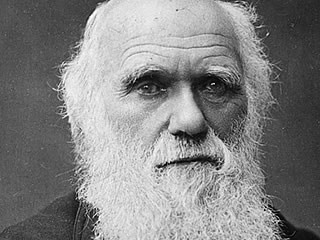
12 February 1809 – 19 April 1882
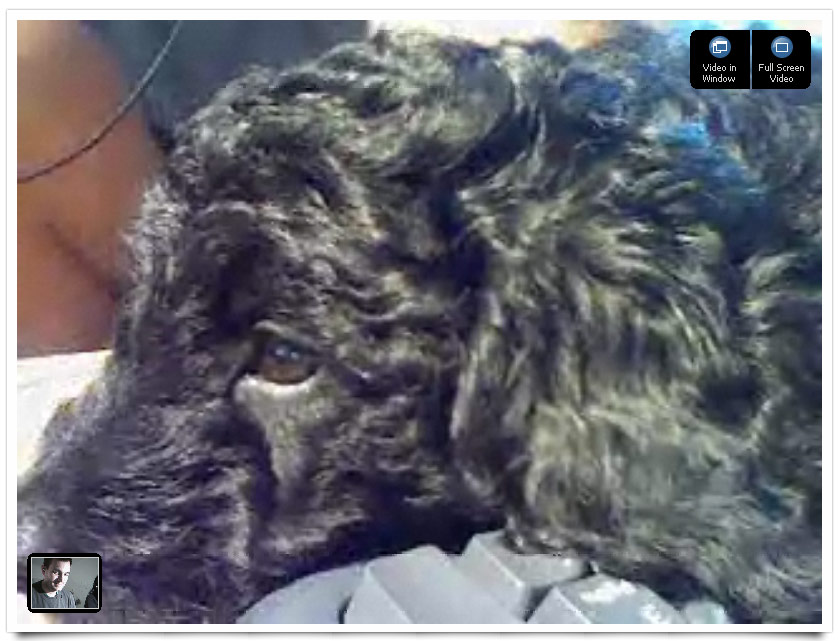
Just had a great video chat with Josh & Amy in San Francisco
They took this pic. & loved Winnie as we are calling her.
I despair about the US foreign policy, about the wars.
Is healthcare a reason to hope? I keep watching.
Item quoted in full below