I’ve been using my iPhone with the HDR setting – like the results! It will load slowly but show the max resolution.
(Posting it here partly to see how my feed to Psyberspace is working, though posting the odd snap here is not a bad idea.)


Walter Logeman: Journal
I’ve been using my iPhone with the HDR setting – like the results! It will load slowly but show the max resolution.
(Posting it here partly to see how my feed to Psyberspace is working, though posting the odd snap here is not a bad idea.)
I have another blog: Psyberspace This is a test message to see if a post here alerts a reader on that blog.
Ill add an img for good measure.
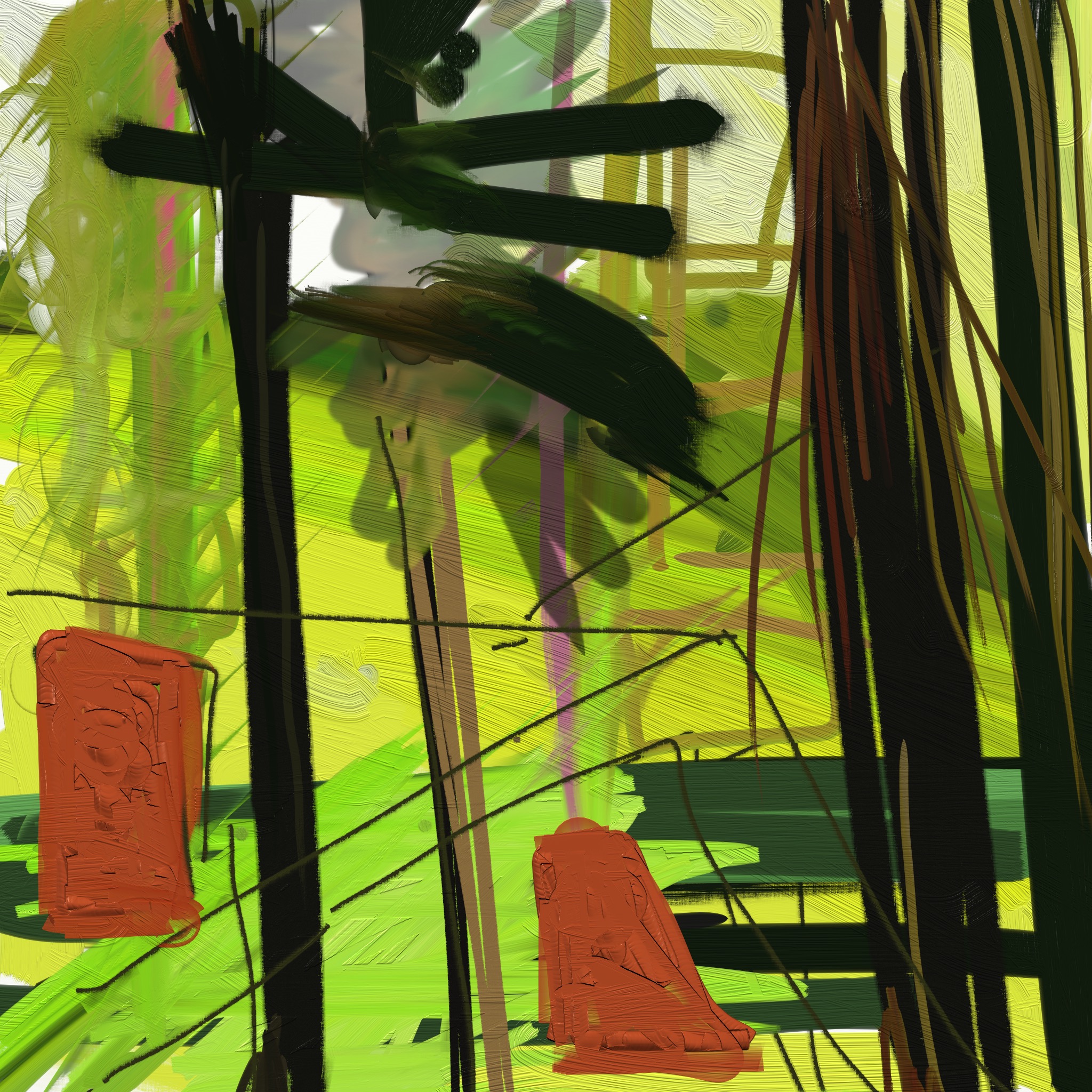
Here is a recent doodle of mine:
❋
Tuesday, 31 August 2021 — Of course this post was an import when I disabled “In this moment….”
I like this poem by David Dominguez.
And I found images of the portrait, and the watermelon paintings as well.
Wedding Portrait
Yesterday afternoon, I hung a framed print in the living room—a task that took two head-throbbing hours.It’s a wedding portrait that we love: Frida and Diego Rivera.I wonder how two people could consistently hurt each other,but still feel love so deeply as their bones turned into dust?Before Frida died, she painted a watermelon still life;before his death, Diego did too.I want to believe that those paintings were composedduring parallel moments because of their undying devotion.If I close my eyes, I can see melon wedges left likecenterpieces except for the sliceDiego put on the table’s corner—one piece of fruit pecked at by a dovethat passed through a window.I know that I won’t be building a bookshelf anytime soonand that the chances of me constructing a roll-top deskare as slim as me building an Adirondack chair that sits plumb,but I’m good with the spackle and putty knives in my tool belt.The knots in my back might not be thereif I had listened to her suggestions,and I could well have done without two hours of silenceover a few holes in the wall.But somehow, life has its ways of working things out.This afternoon, I shut the blinds,turned off the TV, lights, and phone,and massaged my wife’s feet to fight off a migraine—her second one this week despitethe prophylactics and pain killers that we store in the breadbox.For once, I’d like to experience what she feels:nausea, blindness, and pain that strikewhen the cranial vessels dilate,fill with blood, leak, and make the brain swell.Earlier, an MRI triggered the reaction as it mapped her headwith electrical current, gradient magnets, and radio waveshammering her floundering eyes.For now, we have our room, the bed frame, and the mattresswhere she lies as I knead her toes.Come nightfall, I hope that we’ll sit in the patio and watchthe breeze stirring the lemon, lime, and orange treesthat I planted along the back fence.On certain nights, the moon turns our lawninto green acrylic where we sip Syrah and mint teauntil all we know is the soundof our breathing among the whispering leaves.
David Dominguez, “Wedding Portrait” from The Ghost of Cesar Chavez. Copyright © 2010 by David Dominguez. Reprinted by permission of C&R Press.
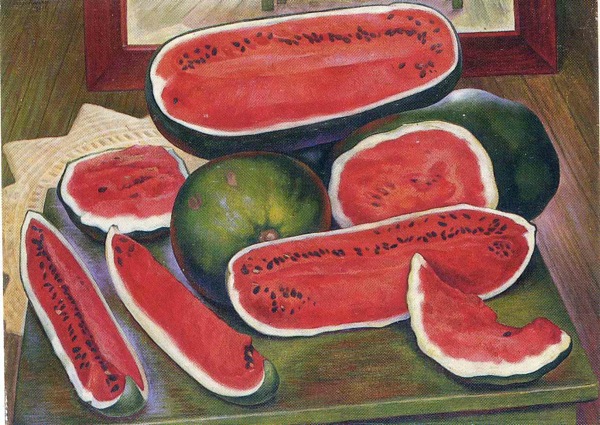
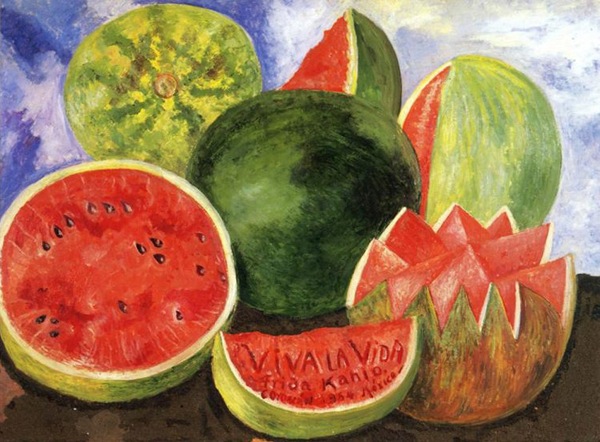
Perhaps this was the portrait:

Noam Chomsky: that the April 6 movement in Egypt began as a group of tech savvy people working with workers on strike. They were squashed by the regime.
A surprise Arab drive for freedom, the West’s structural crisis and new hope coming from Latin America. That’s the modern world in the eyes of Noam Chomsky and Tariq Ali, two prominent thinkers and this week’s guests on Julian Assange’s show on RT.
If you’ve missed the previous episodes, you can always watch them online athttp://assange.RT.com
Subscribe to RT! http://www.youtube.com/subscription_center?add_user=RussiaToday
Another phenomena that struck me is the speed of the spread of the consciousness of change tips from hidden to visible.
~
Note industrialization that traditional Marxism addresses is perhaps more prevalent in China than in the USA. Design, IT development is separated from the material production. Perhaps the real motivation is that if all forms of creativity are integrated and work together the capitalist control can’t be maintained.
Chomsky: China is the assembly plant for the advanced state capitalist counties.
Assange: Internet radicalised youth.
I’ve downloaded the sample. As a New Zealander this option makes sense. Nothing is perfect, but two states for New Zealand would not make sense, no matter how unfair the history.

Amazon.com: One Country: A Bold Proposal to End the Israeli-Palestinian Impasse eBook:: Kindle Store
This review makes it clear what the book is about.
Intelligent writing and vision make this a must-read, November 30, 2006
By Lora GordonThis review is from: One Country: A Bold Proposal to End the Israeli-Palestinian Impasse (Hardcover)
Rather than rehashing the same dead arguments on Palestine/Israel or relying on ‘blame game’ rhetoric, this book offers a refreshing vision of the future: one democratic state for Palestinians and Israeli Jews, living side by side with equal rights. Certainly not a new vision, as the author duly notes, but rarely argued so cogently and with such sound vision for the future. Abunimah draws on successful examples of multi-ethnic states (Belgium, Ireland, South Africa) to shape his argument for a multi-ethnic Palestine-Israel, and to envision how two peoples locked into conflict by decades of oppression might come together.
I was looking over my notes from the Matisse exhibition in Brisbane… but this blog, Art Matters – My thoughts on art, life, and whatever… Carol Lee Beckx – had the exact quote I did not quite get right:
“A sign is enough to suggest a face, there is no need to impose eyes and a nose on people…It is important to leave room for the spectator’s reverie.”
and
“My line drawing is the purest and most direct translation of my emotion.”
Henri Matisse 1951
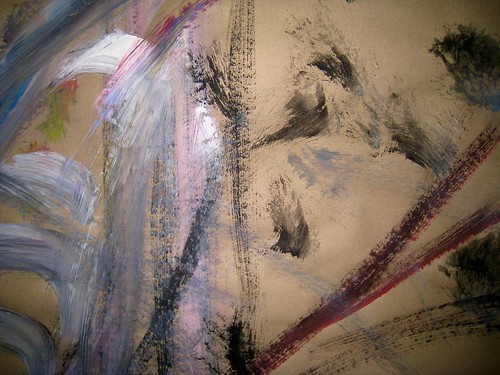
I did this in a workshop last January with paint on paper!! – posing it while playing with MarsEdit, a blog posting tool for the Mac. Wondering how it handles images.
Later : lost the original. Now it is a digital image. I can print it!


I’ve been reading Kevin Kelly’s What Technology Wants. One of the central thesis of the book is that evolution is not only driven by adaptation. There are two other forces at work: structural forces, ie the laws of physics and contingency, luck. What if Beethoven did not have a piano?
I’ll post the picture that impressed me again:
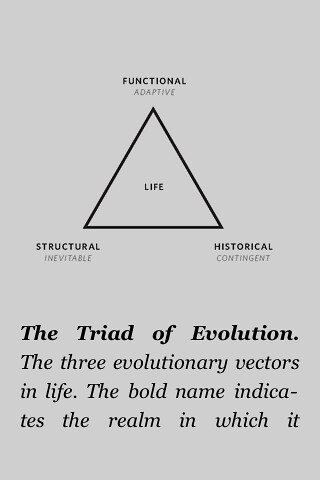
This is a central idea (from the book):
The progression of inventions is in many ways the march toward forms dictated by physics and chemistry in a sequence determined by the rules of complexity. We might call this technology’s imperative.
What is stirring me to write this post is that I listened to a podcast today on Tech Nation, Moira Gunn interviewing Adrian Bejan – details
It is uncanny, and totally in line with the Kevin Kelly theory of what is inevitable that these tow come up with the same ideas. This is the time when we make a shift from classical darwinism, to incorporate something marx might have called dialectical materialism.
More about & by Adrian Bejan here:
TEDxBucharest – Adrian Bejan – YouTube
Interview with ‘Design in Nature’ Author Adrian Bejan, Part One …
His book on Amazon:
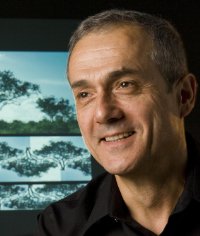
This theory, Bejan calls it “Constructal Law” governs everything. From his book:
The constructal law is revolutionary because it is a law of physics—and not just of biology, hydrology, geology, geophysics, or engineering. It governs any system, any time, anywhere, encompassing inanimate (rivers and lightning bolts), animate (trees, animals), and engineered (technology) phenomena, as well as the evolving flows of social constructs such as knowledge, language, and culture. All designs arise and evolve according to the same law.
What excites me is that the same law – or rules of complexity, a law about change really, governs the psyche too. I think Jung was onto this with archetypes. These structures are universal across cultures.
Saturday, 02 July 2022
I’m reading his “The Physics of Life — The Evolution of Everything”. Its at odds with what I’m thinking now. It’s not remotly dialectical. It’s all billiard balls. Nevermind. One day I may sort this out. Just annoying right now.

Amazon
I’ve quoted a few things from this book on the blog already, so click the tag, Kevin Kelly and you will see my notes as I read the book.
I think its profound.
Its not just about the evolution of technology. He revises biological evolution in a radical way. Its not just him though, he draws on many latest developments in the field. The main thrust is captured in this image from the book.
