Relational Reading

I understand something is changing in our psyche / brain with respect to focus. It is much harder to read books! There are so many articles and blog posts that lament his process. Maybe something is lost, but so much more is gained. It is a lemarkian step in our evolution. Yes we can change psyche, and do to adapt to a new environment. We have such a wonderful capacity for fluidity. I am thankful I am a creature that can evolve!

We are now differently abeled. This process is not new. Media impacts psyche. Photography changed portraiture. Writing changed the oral traditions. Cinema changed theatre. Television changed cinema. Cinematic literacy impacted on the psyche. Old movies are slow! There must be a market in re-editing them for the contemporary soul.

Books are like old movies. We have moved on. Today we read in a relational way. We read a quote by a friend from Moby Dick, with a link to the whole book, we can search for snippets, or read the condensed version, flick to a trailer of the movie, read the reviews, and search, tweet, re-tweet, Instapaper and blog as we go.

This is lamented?!

But don’t get me wrong. There is nothing that will replace a good book, or an old movie for that matter. The context has changed, expanded.

We are still learning how to be here.

~

There are items like this one on how to train yourself to be in the dark:

http://infovegan.com/2010/07/26/how-to-focus

Like all exercise, different kinds of workouts work differently for different people. For me, interval training works wonders— this blog post, for instance, has taken me 70 minutes to research and write — ordinarily a blog post like this before I had this set-up would take me nearly a full day’s worth of work. More importantly though, I’m able to do things like read long articles or even academic papers — things I never used to “have time for” which really meant “had attention for.”

Look at the words in this: Distracted, shattered…

Author Nicholas Carr: The Web Shatters Focus, Rewires Brains | Magazine http://www.wired.com/magazine/2010/05/ff_nicholas_carr/all/1

The Internet is an interruption system. It seizes our attention only to scramble it. There’s the problem of hypertext and the many different kinds of media coming at us simultaneously. There’s also the fact that numerous studies—including one that tracked eye movement, one that surveyed people, and even one that examined the habits displayed by users of two academic databases—show that we start to read faster and less thoroughly as soon as we go online. Plus, the Internet has a hundred ways of distracting us from our onscreen reading. Most email applications check automatically for new messages every five or 10 minutes, and people routinely click the Check for New Mail button even more frequently. Office workers often glance at their inbox 30 to 40 times an hour. Since each glance breaks our concentration and burdens our working memory, the cognitive penalty can be severe.

(via Instapaper)

Walter
iPad & Art

This popped up on RWW today:

iPad Art: Who Says You Can’t Create With The iPad!:

The iPad has taken the tech world by storm this year. In a half-year poll, ReadWriteWeb readers voted it the most important product of 2010 so far. One of the few criticisms of the iPad has been that it’s mostly a media consumption device. It doesn’t have a camera and writing on the iPad is akin to walking on the moon (everything happens in slow motion).

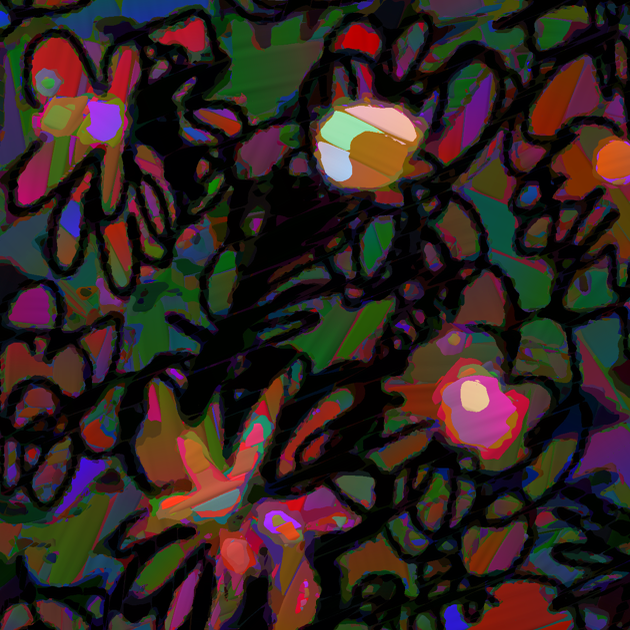
However, the iPad has gained popularity in the artistic community – in particular thanks to an iPad app called Brushes, which enables you to ‘finger paint’ a colorful work of art.

It is a great tool – that’s why I’ve just got one. Brushes on the iPhone is OK, I prefer Layers and Sketchbook, but I’m upgrading them all to iPad versions.

The big drawback is pressure sensitivity, which puts it way behind any wacom based screns like my M200.

Just did my iPad first doodle today.

Google (custom domain) Calendar on iPad

It has always worked so well on the iPhone I’ve forgotten how I did it.

For some reason my Gmail (custom domain) works instantly in the iPad, I’ve forgotten how I did that already!

But I am now setting up the Google (Custom Domain, apps docs, whatever they call it!! – How about Google Live? Google Cloud? Google Everywhere? To hard to name: Gapps?)

Short answer, worked instantly:

How to Add Google Calendar to Your iPad

Maybe this that I had already tried

http://www.google.com/calendar/hosted/psybernet.co.nz/iphoneselect

had a part to play.

Anyway it works

The MS Exchange way did not, however I had to get my Contacts working using MS exchange.

GroupWise on iPad

Apparently there is this app for mail and they make another one for docs.

GW Mail for iPhone, iPod touch, and iPad on the iTunes App Store:

Description GW Mail is a GroupWise email client for the iPhone. With this app you get a much better interface than Novell delivers by default through GroupWise WebAccess. This app gives you some of the enterprise features that you wouldn’t get with simple POP/IMAP – like access to your Frequent Contacts and GroupWise address book.

Hugh Wilson

Hugh Wilson (botanist) – Wikipedia, the free encyclopedia:

Hugh Dale Wilson (born 1945) is a New Zealand botanist. He has written and illustrated a number of books about New Zealand plants. He manages Hinewai Reserve on Banks Peninsula.

My friend Hugh. On Wikipedia!

He probably won’t tread this as he is a luddite. His motto could be “I am a luddite so you don’t have to be”, But its not. He sets an example as to how to save the planet.

Hinewhai

Photos of Kate & I at & around Hinewhai – Flickr

Fluid form

Edge: THE MATHEMATICS OF LOVE: A Talk with John Gottman:

(JOHN GOTTMAN:) I look at relationships. What’s different about what I do, compared with most psychologists, is that for me the relationship is the unit, rather than the person. What I focus on is a very ephemeral thing, which is what happens between people when they interact. It’s not either person, it’s something that happens when they’re together. It is like a structure that they’re building by the way they interact. And I think of it that way, almost like a fleeting architectural fluid form that people are creating as they talk to each other, as they smile, as they move.

So Gottman too! The relationship is the unit, the locus of the therapy not the individual people.

~

I expect a heap of posts will automatically appear below so no need to say more!

Later But they didn’t, not as I expected. This quote is related to an earlier post of mine: https://psyberspace.walterlogeman.com/2010/people-myth/

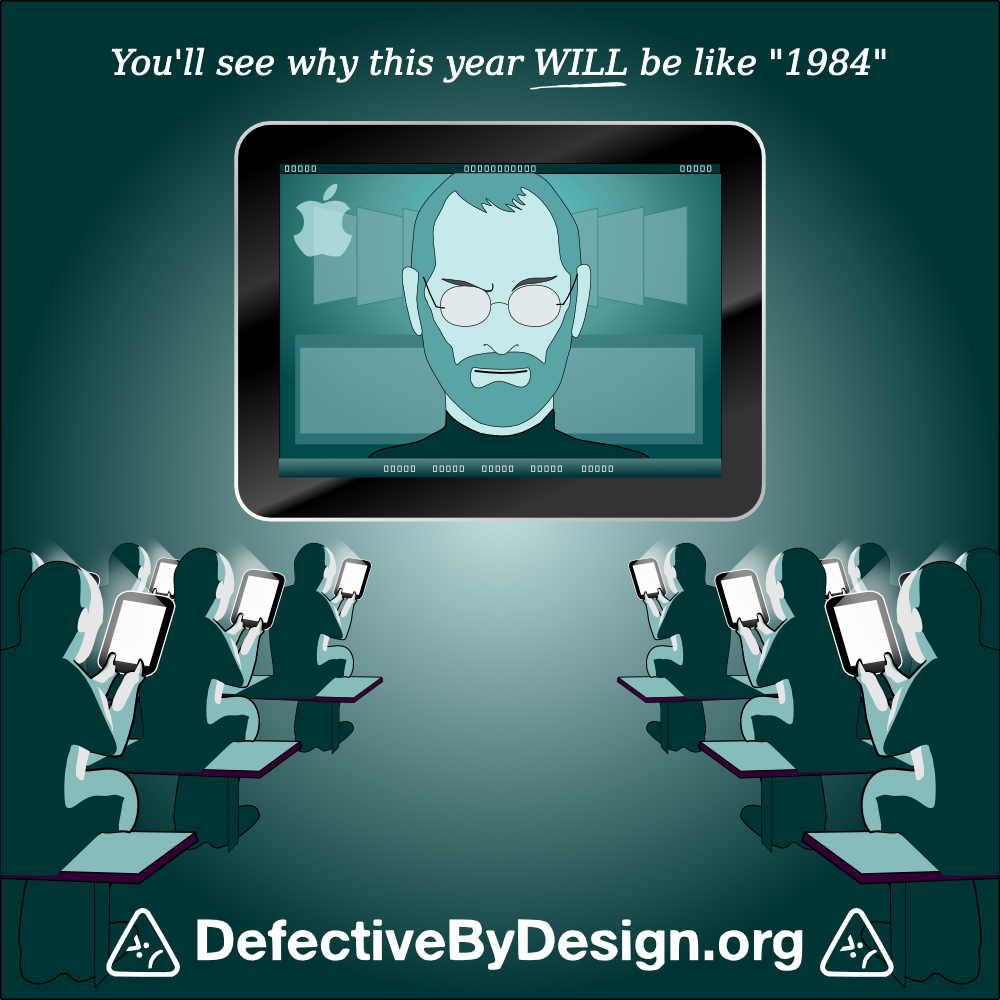
Bad Apple?

Love that poster. Love that there are groups and people who say these things:

Interview with DefectiveByDesign – The Digital Music Weblog:

DefectiveByDesign:

1) You will lose control of your hardware. The corporations imposing DRM systems will be in control of your computer and electronic devices, restricting your actions and monitoring you.

2) You will lose your traditional rights. You will lose the right to sell the music/video/e-books you thought you purchased, and you won’t be able to make private copies or backups or share with family and friends.

3) You will have additional privacy concerns. Your personal viewing/listening/reading habits will be available in the same way that your telephone records now are.

Welcome — Free Software Foundation — working together for free software:

A strong free software movement focused on the principled issues of software freedom — and a strong FSF in particular — will determine what freedoms the next generation of computer users enjoy. At stake is no less than the next generation’s autonomy.

— Benjamin Mako Hill, writer, technologist and FSF board member

iPad DRM endangers our rights | DefectiveByDesign.org:

Mr. Jobs,

DRM will give Apple and their corporate partners the power to disable features, block competing products (especially free software) censor news, and even delete books, videos, or news stories from users’ computers without notice– using the device’s “always on” network connection.

This past year, we have seen how human rights and democracy protestors can have the technology they use turned against them. By making a computer where every application is under total, centralized control, Apple is endangering freedom to increase profits.

Apple can say they will not abuse this power, but their record of App Store rejections and removals gives us no reason to trust them. The iPad’s unprecedented use of DRM to control all capabilities of a general purpose computer is a dangerous step backward for computing and for media distribution. We demand that Apple remove all DRM from its devices.

The computer in my pocket — Free Software Foundation — working together for free software:

It shocks me that anyone, especially free software advocates, would happily put up with such nonfree computers. I think part of the reason lies in the fact that most users of mobile phones, and even most phone users that care about software freedom and technological autonomy, don’t think of their phones as computers. Thinking of our phones as computers will not solve any of the problems I’ve alluded to. But doing so remains an essential first step toward any solution. Although we must still work to build viable, widely accessible, and compelling free phones, we must first convince both users and developers that this is an important goal. Reminding people that our phones, both free and nonfree, are powerful general-purpose computers remains an important and still largely unfufilled part of this process.

We must find ways to remind ourselves and others of the fact that modern phones are powerful computers with powerful interfaces that are useful for an unimaginable variety of arbitrary applications. We must focus on the fact that these computers have microphones, cameras, and other sensors, and that we trust them with our closest secrets and most sensitive data. We must not forget that, in almost all cases, these computers remain controlled, completely and ultimately, by companies that very few of us trust at all.

I’m not sure how we will accomplish this task. But more of us need to think long, hard, and creatively about this problem. I’ll be calling my phone “my computer” as a first, very personal, step. I have done this over the last week and it has led to some conversations with slightly confused acquaintances. Of course, this doesn’t make my phone any more free. But it does mean I’m talking more about the nonfreeness most of us have put up with too silently.

At this stage, that seems like progress.

Bad Apple? I have a question mark in the title… I think the problem is far bigger than Apple. It is worth protesting against Apple and the media companies, and RIAA, MPAA and the administration in Washington, D.C. and all other governments who are out to protect the rich to make them richer… the system stinks.

The whole profit motive means that everything made by corporations is defective by design, everything we use, read, eat, drive, watch is defective by design. Profit is put above form and function. We are not free, nor are the wage slaves that make these things, and the cost to the planet is horrendous as environmentally friendly is not always profit friendly. Even when corporations do the right thing it is because it is more profitable.

How to be yourself, creative, alive, when everything is defective by design?

I will call my phone my computer. And I will say it is full of profit driven DRM. And I drive a car, and buy over-wrapped products. I will use products with values in mind, the complex mix of which ones might be less exploitative than others.