

The Pre-Raphaelite Dream

Dunedin Art Gallery:

The Pre-Raphaelites are renowned for their rejection of the everyday, often rather sentimental subject matter of much 19th century British painting. They favoured subjects derived from literary sources and medieval romance, and used vivid colour and lyrical forms for dramatic and emotional effect.

I am interested in this as it has a resonence with my own psychological bent. I imagine those words dont really reflect how the Pre-Raphaelites would
have described themselves.

I will be going to the exhibition I imagine, and have enrolled in the course here at the Uni:

(5 evening sessions and an optional weekend gallery visit)

Course Code: QPR01

This five-evening course looks at the fascinating 19th-century British art movement that is showcased in the exhibition showing at the Dunedin Public Art Gallery this spring. The widely recognised Pre-Raphaelite style will be examined and explained, with both its familiar and its lesser-known concerns and aspects such as the Gothic revival, Italian poetry, the Arts and Crafts and the heroines of literature coming in for special attention.
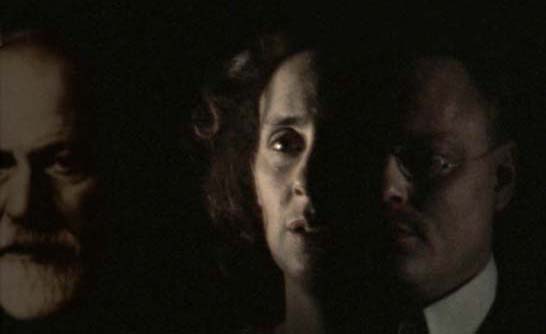
Depth

Some links here: “Readings of interest in Depth and Archetypal Psychology”

Some interesting items collected by Michael Staples, who is an advocate for depth psychology in California.

Archetypes

Archetypes, Archons and Egregores This includes a very useful list of definitions of archetypes – with references, for example:

“Archetypes resemble the beds of rivers: dried up because the water has deserted them, though it may return at any time. An archetype is something like an old watercourse along which the water of life flowed for a time, digging a deep channel for itself. The longer it flowed the deeper the channel, and the more likely it is that sooner or later the water will return.” Carl G. Jung, from Psychological Reflections

Email groups rule

In this otherwise as expected item about Arnie: Schwarzenegger Wants Davis to Stop Filling Posts and Signing Bills, there is this snippet: “The group will do most of its work by e-mail and conference call, a Schwarzenegger aide said.” A virtual group like this can do its work more efficiently than any debating chamber I imagine. Does not mean they will have better policy though. Maybe just more efficiently do what nasty stuff they are brewing up.

Notes on James Hillman’s The Terrible Love of War Conference, November 2002

From a 2-day Seminar: November 8 & 9, 2002, Held in Santa Barbara, CA at the historic, beachfront Radisson Hotel, Rough-Draft Conference Notes & Comments by Kathleen Jenks, Ph.D. (Written 19 November 2002 – ?)

But when JH asked what war might want from us — and gave those telling examples — I was hooked.

This is typical of my response to a lot of Hillman too – he infuriates me, but this way of looking at things has a peculiar appeal. For anyone reading along here this is the sort of question that brings in the power of a acting as if the entity has a life and is pulling us along – see earlier item on teleology.

More in line with my project we might ask:

What does cyberspace want from us?

This is one of the links I just found from Matthew Clapp’s website – which I am exploring at the moment.

the invisible is more important than the visible

Be afraid. Be very afraid.:

R. Buckminster Fuller’s students once asked him to name the most important figure of the twentieth century. Sigmund Freud, he said without a moment’s hesitation. They were shocked. Why Freud? Why not Einstein, about whom Fuller had written extensively, or some other figure from the world of science or economics or architecture, to which he had devoted his considerable energy? So Fuller explained himself. Sigmund Freud, he said, was the one who had introduced the single great idea upon which all the significant developments of the twentieth century had rested: the invisible is more important than the visible. You would never have had Einstein if Freud hadn’t convinced the world of this first. You would never have had nuclear physics.

Linking to this item for that one quote, and to add, that if it were not for that one idea, we would not have cyberspace.

Pushing a new meme

The Brights:

Currently the naturalistic worldview is insufficiently expressed
within most cultures. The purpose of this movement is to form an
umbrella Internet constituency of individuals having social and
political recognition and power. There is a great diversity of persons
who have a naturalistic worldview. Under this broad umbrella, as
Brights, these people can gain social and political influence in a
society infused with supernaturalism.

As someone who grew up taught atheism in the most reverent way,
and for most of my life having thought of myself as a humanist, it
seems strange I don't like this movement. But I don't.

I am not on the liberal theologian's side either. Nor a theist or
even a polytheist, nor wicca even Starhawkian, though she appeals.
Not a person of faith.

Does that leave anything? Yes! And we are an even more isolated
bunch than the brights – at the risk of helping to spread the
unaesthetic meme. As someone who works with the psyche, and who knows
there are autonomous depths at work in our lives I am ok with being
something more than a naturalist. Perhaps of poetic temperament – which
is different from faith and it is not bright, give me shaded,
deep, chthonic, moist, soulful, hidden, dappled, dark. I don't
want a meme for it.

When ugly is good and pretty is bad

Clay Shirky has some good insites here: Many-to-Many: Why I Don’t Like Wikis Email

Weblogs provide a good counter-example. While wikis make a poor presentation medium (when my students use wikis, they universally and unconciously move the content into Word, PowerPoint, HTML or Flash when they ahve to present), weblogs are in many ways too pretty.

Every day I grieve the messyiness of email. I dont like it at all. It is not the plain textness of it but the html mess and the lack of a clear quoting protocol… one that was there in the early days. Then there is the whole line length issue, broken urls and so on. There is a loosing battle to keep emails in plain txt. I cant even find a decent email client. But Clay is onto something here… the mess is somehow convivial.